
Trump’s UFO file releases raise new questions because the story has moved from political promise to public documents. Since May 8, the U.S. government has begun publishing declassified material on unidentified anomalous phenomena, or UAPs, including videos, images, reports, historical files, and witness accounts.
The releases follow a February directive from U.S. President Donald Trump, who ordered federal agencies to begin identifying and releasing government files related to UFOs, UAPs, possible extraterrestrial life, and other related records. In April, Trump said the review had uncovered “interesting” documents and said the first releases would begin soon.
They have now begun. But the files have not settled the debate. They show that the U.S. government has collected a large body of material on unexplained sightings over decades. They do not show confirmed proof of alien technology.
What The New UFO File Releases Include
The US Department of War released the first batch of files on May 8. It included a 1947 report of “flying discs,” grainy images of “unidentified phenomena” from the Apollo 12 lunar mission, and a transcript from the Apollo 17 crew describing unidentified objects seen from the moon.
A second batch followed on May 22. It included previously classified files on alleged sightings of green orbs, discs, fireballs, and other unexplained phenomena. One document ran 116 pages and described 209 sightings near Sandia, New Mexico, between 1948 and 1950.
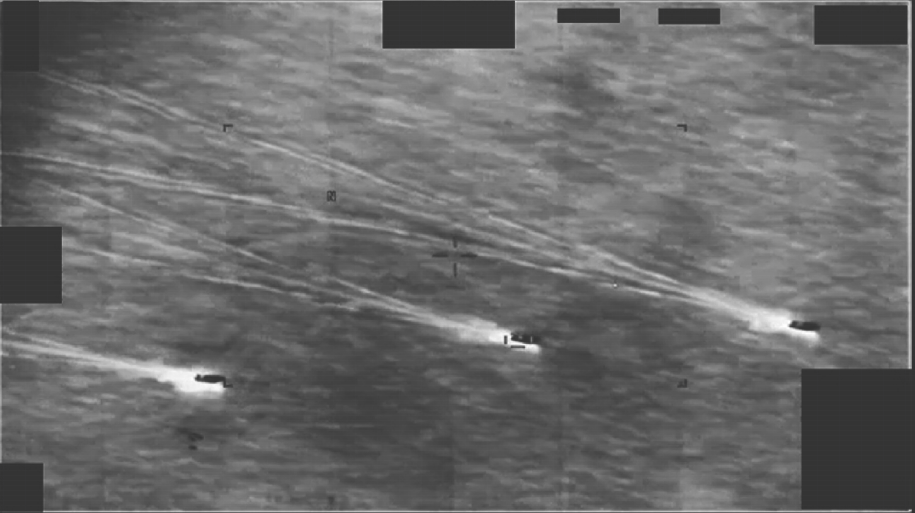
The May 22 tranche included six PDF files, seven audio files, and 51 video files. The videos reportedly show UAP footage from military aircraft, with descriptions accompanying each clip.
The official U.S. release page says additional files will be published on a rolling basis.
More Transparency, Still No Alien Proof
The UFO file releases have drawn huge public interest. U.S. officials said the UAP website received hundreds of millions of hits soon after launch, showing how much attention the topic still attracts.
Still, the official line remains cautious. The Pentagon’s All-domain Anomaly Resolution Office has said it has no evidence linking UAP cases to extraterrestrial origin. Earlier U.S. government reviews also concluded that most sightings are eventually explained as aircraft, balloons, drones, satellites, atmospheric effects, or sensor errors.
That distinction matters. A sighting can be real without being alien. A witness can be credible while the evidence remains incomplete. A military sensor can record something unusual without proving it came from outside Earth.
The new files therefore point less to a final answer and more to a transparency shift. UFOs are no longer being treated only as fringe entertainment. They are now part of public discussions about airspace security, military monitoring, drones, surveillance, and government secrecy.
Recent Philippine Sightings: Space Jellyfish and Green Fireballs
Recent Philippine sky events show why the subject remains so fascinating, and why caution matters.
On May 12, lights seen over parts of the Philippines at around 8:10 p.m. were described online as a “space jellyfish.” The Philippine Space Agency said the sighting was highly likely caused by China’s Long March 6A, also called Chang Zheng 6A, which launched from the Taiyuan Satellite Launch Center at around 7:58 p.m. Philippine time.
PhilSA explained that the effect can happen when a rocket’s exhaust plume at high altitude catches sunlight while people on the ground are already in darkness. To ordinary observers, the result can look strange, glowing, and almost impossible to identify.
Another dramatic case followed on May 25, when a bright green fireball appeared over Mayon Volcano at 10:33 p.m. The event was captured by PHIVOLCS’ Ligñon Hill camera and drew immediate attention online. PhilSA later said the object was a meteor that disintegrated in the atmosphere. It did not strike the volcano.
These cases were not imaginary. People saw real events in the sky. But both examples also show how quickly speculation can grow before scientific agencies provide context.