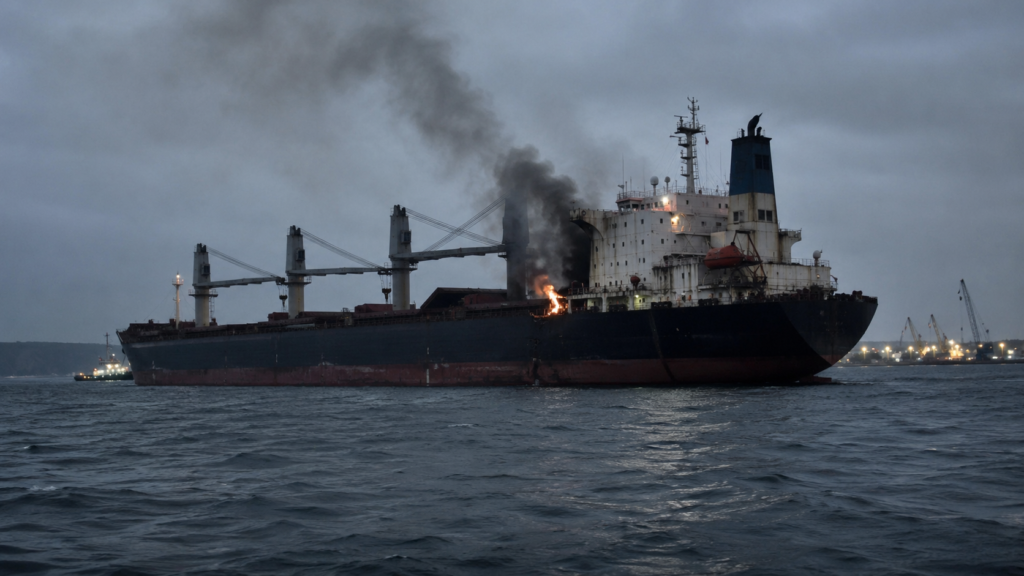
Two Filipino seafarers have been killed in a series of drone attacks on commercial ships in the Black Sea. Twelve others were injured, while one Filipino remains missing.
The incidents add to a growing list of Filipino casualties in international conflicts. From ships attacked in the Red Sea and Strait of Hormuz to caregivers facing missile strikes in Israel, Filipino workers are increasingly exposed to wars they did not create and cannot control.
Two Filipinos Killed in Black Sea Attacks
The Department of Migrant Workers said the first Filipino seafarer was killed on July 6. The second died during another attack on July 19.
Nine commercial vessels carrying a combined 139 Filipino seafarers were affected. Of that number, 124 were reported safe and unharmed. Four injured seafarers have already returned to the Philippines, while eight others continue to receive medical treatment.
Most of the vessels were bulk carriers, oil tankers or product tankers operating near ports and anchorages in southern Ukraine. Several were struck while docked, anchored or shortly after leaving port.
The northern Black Sea and Ukrainian ports have long been classified as warlike or high-risk areas. However, civilian shipping continues because Ukraine and Russia remain major exporters of grain, energy products and other commodities.
The DMW is now examining whether the manning agencies involved followed deployment rules and security requirements. Agencies found negligent could face penalties.
Filipino Seafarers Stranded in the Strait of Hormuz
The Black Sea is not the only maritime conflict zone affecting Filipino crews.
As of mid-July, around 3,000 Filipino seafarers remained aboard approximately 400 ships stranded in the Persian Gulf. Iran’s restrictions and repeated disruptions at the Strait of Hormuz have prevented vessels from leaving safely. The DMW said the seafarers were not hostages and continued receiving salaries, but some had already spent months aboard their ships as contracts expired and replacement crews remained unable to enter.
Thousands of other Filipino seafarers have managed to leave the area. Still, the danger remains. The Strait of Hormuz links the Persian Gulf with the Gulf of Oman and carries a large share of the world’s oil and liquefied natural gas.
In March, 46-year-old Filipino motorman George Francis Miranda disappeared after the UAE-registered tugboat Mussafah 2 was struck while responding to a distressed vessel near the strait. He was the only Filipino aboard.
Iranian forces also intercepted the Epaminondas and MSC Francesca while the ships attempted to leave Hormuz in April. Fifteen Filipino seafarers were aboard the two vessels. The ten Filipinos from the Epaminondas eventually returned home in July after Iranian authorities granted clearance.
The Red Sea crisis has produced an even heavier Filipino toll
In March 2024, a Houthi anti-ship missile struck the True Confidence near Yemen. Two Filipino seafarers were killed and three suffered serious injuries.
Three months later, the Houthis attacked the MV Tutor with an explosives-filled drone boat. Filipino second engineer Nixon Asejo was trapped in the flooded engine room and presumed dead. His body was never recovered. The remaining 21 Filipino crew members were rescued after spending several days aboard the damaged vessel.
Seventeen Filipinos aboard the Galaxy Leader spent 428 days in Houthi captivity after the ship was seized in November 2023. They were finally released in January 2025.
In July 2025, all 17 Filipinos aboard the Magic Seas survived an attack involving guns and rocket-propelled grenades. The vessel later sank. A day later, the Eternity C came under repeated attack. Three Filipino seafarers were killed, one remained missing, and nine were held by the Houthis for nearly five months before their release in December 2025.
Seafarers’ Rights in Conflict Zones
Republic Act No. 12021, or the Magna Carta of Filipino Seafarers, guarantees rights involving safe travel, safe working conditions, medical care and repatriation. Separate DMW rules for warlike areas allow seafarers to refuse dangerous voyages and return home at the company’s expense.
Those who continue into designated war zones may qualify for additional wages and higher death or disability compensation. But extra pay does not make missiles, drones or naval blockades safe. The right to refuse also means little if a seafarer fears blacklisting or losing future contracts.
Filipinos Living and Working Inside War Zones
The danger extends far beyond ships.
By July, the Philippine government had repatriated 10,580 OFWs, other overseas Filipinos and dependents from conflict-affected parts of the Middle East. Repatriation requests slowed after peaking in April and May, but renewed attacks continue to create uncertainty.
Philippine officials estimate that around 2.5 million Filipinos live or work across the Middle East. Many are in Gulf countries that have faced Iranian missiles, drones or falling debris from interceptions.
A Filipino airport worker in Kuwait suffered minor injuries early in the conflict. Three more Filipino workers were injured during a later attack at Kuwait International Airport in June. In Qatar, a Filipino was wounded by shrapnel from an intercepted missile. In the United Arab Emirates, a Filipina received treatment after broken glass injured her during an attack.
Two Filipinas killed in Iranian missile attacks on Israel
Caregiver Mary Ann Velasquez de Vera died on February 28 after an Iranian missile struck Tel Aviv. She was reportedly helping her elderly patient reach safety when shrapnel hit her. On April 5, 29-year-old Lucille Jane Gershovich was killed when an Iranian missile struck a residence in Haifa. Her Israeli husband and his parents also died in the attack.