A Chinese state-owned newspaper has triggered a diplomatic dispute after portraying the Philippines as a monkey controlled by the United States and Japan. The insult was new in format, but not in message. Similar imagery has long depicted Filipinos as primitive, dependent and incapable of making their own decisions.
China Daily’s provocative video
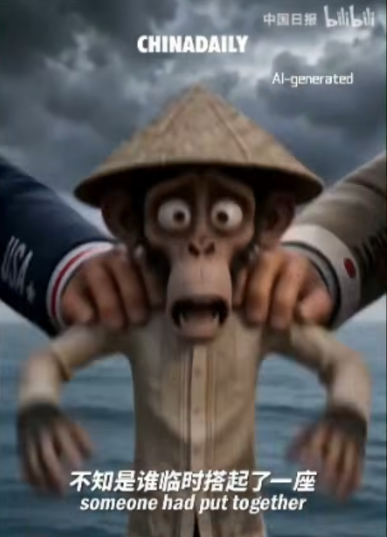
On July 10, China Daily posted an animated video titled “Litter on Waves: Failed Maritime Karaoke” on Facebook. It appeared two days before the tenth anniversary of the July 12, 2016 arbitral ruling that rejected the legal basis of China’s sweeping South China Sea claims.
The video showed a monkey in Filipino clothing performing under the direction of arms labelled “USA” and “Japan.” After taking a sheet marked “South China Sea arbitration award,” the character was thrown into the water and blasted by a water cannon.
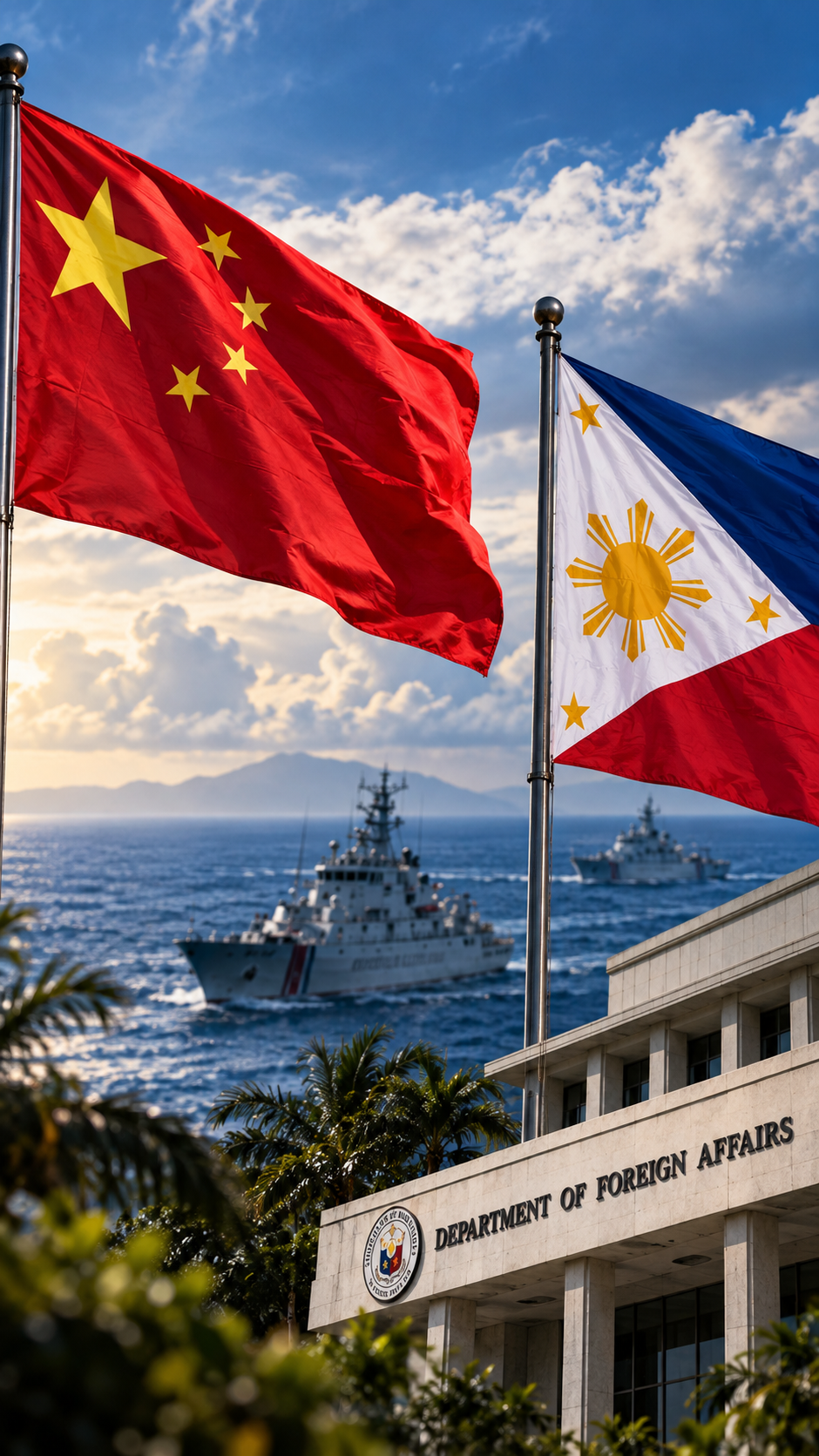
The Department of Foreign Affairs called the depiction demeaning, dehumanizing and racist. Manila lodged a diplomatic protest, demanded its removal and sent a letter to China Daily’s editor-in-chief.
Defense Secretary Gilberto Teodoro Jr. said the propaganda showed the weakness of a government unable to defend its claims through evidence, reason or law. Several senators and other officials also condemned the animation and demanded an apology.
Chinese Foreign Ministry spokesperson Lin Jian said the video was “not an act of the government” and declined to comment further. He then repeated Beijing’s position that the arbitration was a political farce and that the award was invalid.
China Daily later published a defence arguing that the monkey represented certain Philippine politicians, not Filipinos generally. That explanation is difficult to accept when the character wears national clothing, represents the Philippine side of a territorial dispute and suffers violence associated with real confrontations at sea.
China revives a colonial insult
Monkey imagery has a long racist history, including in American colonial cartoons that portrayed Filipinos as primitive and incapable of self-government.
The irony goes beyond China Daily borrowing a Western colonial image to attack a fellow Asian nation. The video also repeated the underlying colonial message: Filipinos cannot think for themselves, defend their own interests, or choose their own partners without manipulation from a supposedly superior power.
Chinese state media used a similar narrative after the 2016 arbitral ruling. Xinhua portrayed the Philippines as a small primate in one cartoon and showed Uncle Sam controlling a puppet resembling President Benigno Aquino III in another, with Japan nearby.
The imagery does not by itself prove that China is a colonial state. But it reflects a colonial way of viewing the region, with China as the dominant power and smaller countries denied an independent voice.
The Padilla-Tarriela dispute
Tarriela had earlier drawn criticism for using comical images of Chinese President Xi Jinping in a university presentation. China protested, and Padilla argued that a government official should not mock a foreign leader.
After the China Daily video appeared, Tarriela challenged Padilla and other senators to demand an apology from China. Padilla condemned the video but accused Tarriela of encouraging “wartime propaganda.” He also referred to white colonizers and supremacists historically viewing Asians as “monkeys of different colors.”
That history helps explain why the imagery is racist, but it does not identify who produced it. White supremacists did not create the July 10 video. China Daily did.
Tarriela’s Xi caricatures may have been undiplomatic, but they targeted a political leader. China Daily used Filipino national imagery to portray the Philippine side as inferior and manipulated. The two cases are not equivalent.
The Philippines is not a US-Japan puppet
The video’s other central claim is that Manila has no independent foreign policy and merely follows Washington and Tokyo. This denies Philippine agency and avoids answering the country’s legal and security concerns.
The United States and Japan naturally have their own strategic interests in the Philippines and the wider region. That does not change the fact that the three countries are natural partners because they share democratic institutions, political freedoms and a commitment to open public debate. China, by contrast, operates under a one-party authoritarian system in which major outlets, including China Daily, are state-owned and politically controlled.
Alliance does not mean obedience, and cooperation does not make the Philippines a proxy of the US or Japan.
The Philippines does not need instructions from Washington or Tokyo to oppose water-cannon attacks, obstruction of fishermen or expansive claims inside its exclusive economic zone.
Those actions directly affect Filipino lives, national security and lawful maritime rights. The dispute exists because China claims and attempts to control waters where Filipinos have their own legitimate interests.
American and Japanese support strengthens the Philippine position, but Filipinos would defend their rights in the West Philippine Sea with or without it.
Presenting the Philippines as a puppet is therefore more than an insult. It is a way of avoiding the reality that Filipinos can examine China’s conduct, reject its claims and choose their own partners.