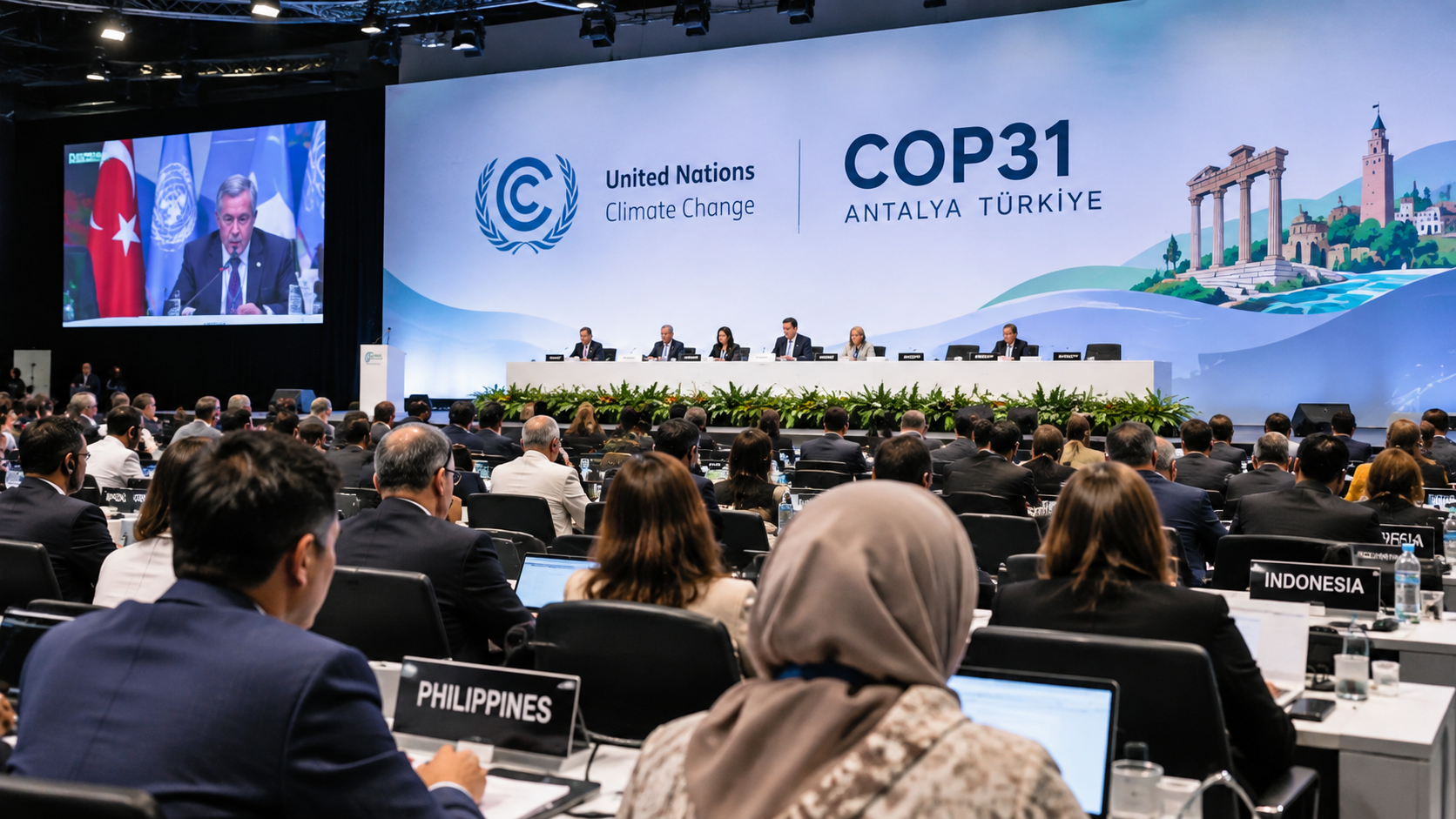
The Philippines is seeking greater international climate funding and technological assistance as COP31, the United Nations’ annual climate summit, begins in Antalya, Türkiye. The conference, running from November 9 to 20, brings together nearly 200 countries to negotiate measures against climate change.
For the Philippines, the stakes extend far beyond international environmental commitments. Rising temperatures, destructive typhoons, flooding, and threats to agriculture are already placing enormous pressure on communities and the national economy.
Climate change could cost the Philippines billions
The Department of Environment and Natural Resources (DENR) warns that failing to address climate change could cost the Philippines approximately ₱645 billion annually during the 2030s, across eight major economic sectors. Government projections also suggest that climate-related losses could reach 7.6% of GDP, equivalent to approximately ₱1.4 trillion, by 2030.
Extreme heat presents another serious concern
According to the country’s National Adaptation Plan, up to 11 million Filipinos could experience dangerous heat indices exceeding 42°C by 2030. Agriculture, construction, and other outdoor industries face particularly severe risks. Meanwhile, millions of Filipinos remain exposed to recurring typhoons, flooding, and rising sea levels. These projections highlight why climate adaptation is becoming an economic necessity, not simply an environmental priority.
What the Philippines wants from COP31
Environment Secretary Juan Miguel Cuna, who leads the Philippine delegation, has outlined five negotiating priorities centered on climate finance, technology, and disaster assistance. One major demand is greater access to international funding, particularly grants that would help developing countries strengthen infrastructure and prepare for natural disasters without accumulating additional debt.
The Philippines also wants easier access to the international Fund for Responding to Loss and Damage, which supports vulnerable countries affected by climate disasters.
Another priority involves technology transfer. The government is seeking international assistance to support cleaner energy, improve resilience, and meet its emissions reduction commitments.
The delegation also intends to defend national authority over carbon-credit transactions and promote domestic climate initiatives.
The Philippines has reaffirmed its target of reducing greenhouse gas emissions by 75% by 2035, with most of that ambition dependent on international support.
Why international climate funding remains difficult to access
Although wealthy countries have committed to helping developing nations address climate change, accessing that assistance remains complicated. In October, the Philippine Climate Change Commission identified several obstacles, including high borrowing costs, complicated application procedures, and lengthy approval processes. These problems can delay projects designed to protect vulnerable communities, particularly those requiring stronger flood defenses, climate-resilient infrastructure, and improved early-warning systems.
The issue also raises questions about international responsibility
The Philippines contributes a relatively small share of global greenhouse gas emissions, while major industrialized economies account for much larger shares of historical emissions. Under the Paris Agreement, developed countries have obligations to provide financial assistance to developing nations. However, the availability, terms, and delivery of that support remain contentious issues in international negotiations.
What happens after COP31?
The summit continues until November 20, with world leaders scheduled to meet on November 11–12. The Philippines is also using the conference to present its domestic climate initiatives, including forest conservation, marine protection, and programs supporting the transition toward cleaner industries. As ASEAN chair in 2026, the country has an additional opportunity to highlight the climate challenges facing Southeast Asia.
For millions of Filipinos, however, the ultimate measure of COP31 will not be the number of declarations signed in Türkiye. It will be whether international commitments translate into accessible funding, stronger disaster preparedness, and meaningful protection for communities facing increasingly costly climate risks.