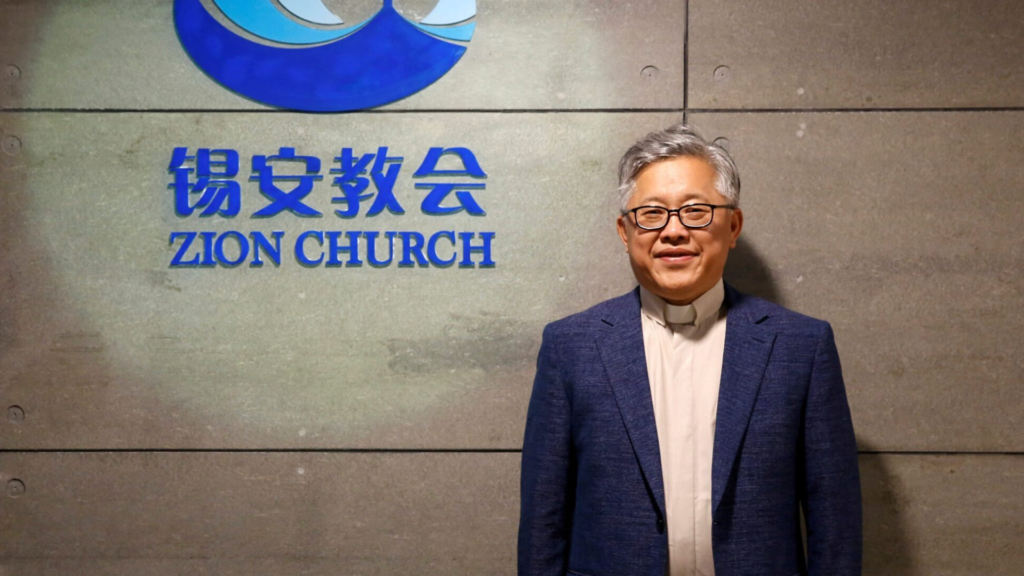
The release of Chinese pastor Jin Mingri, also known as Ezra Jin, brought relief to his family and supporters, but eight Zion Church members are are still detained and are facing trial.
Pastor Jin freed, but others still detained
Pastor Jin arrived in Los Angeles on July 4 after months in detention in the southern Chinese city of Beihai. He founded Zion Church, an independent Protestant house church that operated outside China’s state-controlled religious system.
Jin’s case also drew international attention after U.S. President Donald Trump raised it with Chinese leader Xi Jinping during a May visit to Beijing.
After his release, Jin said Chinese authorities dropped the charges against him without forcing him to confess or putting him through a show trial. That made his freedom even more striking.
Jin was only one of several Zion Church figures caught in the case. Authorities detained members and leaders of the church in October 2025 and later accused them of crimes linked to “illegally using information networks.” Zion Church had grown through online sermons and small gatherings, especially during the COVID-19 period.
Religious life, digital communication, and state control now overlap in China. It is not only about a church building. It is also about who may preach, who may gather, and who may reach believers online.
Eight Zion Church members now face trial
The biggest recent development is that eight Zion Church members remain in custody and now face criminal proceedings.
ChinaAid said Chinese prosecutors filed criminal charges against eight members of Beijing Zion Church in late July without notifying their defense attorneys or seeking their legal opinions. The remaining detainees include Wang Lin, Yin Huibin, Gao Yingjia, Wang Cong, Wu Qiuyu, Wang Zhong, Lin Shucheng, and Liu Zhenbin.
They are being held in detention centers in Beihai, Guangxi, far from Beijing, facing charges of fraud or illegal business operations. The accusations appear tied to church offerings and seminary-related payments, according to ChinaAid.
Independent religious groups in China often face pressure not only through direct religious restrictions, but also through criminal, financial, and administrative charges.
Faith under state control
China officially recognizes several religions, including Protestantism, Catholicism, Islam, Buddhism, and Taoism. But recognition does not mean freedom. Religious groups are expected to operate through approved channels and under the authority of the state.
For Protestant churches, that often means pressure to join the state-approved Three-Self Patriotic Movement. For Catholics who remain loyal to Rome rather than Beijing’s religious bureaucracy, it can mean monitoring and pressure. For Uyghur Muslims in Xinjiang and Tibetan Buddhists, religion is tied to a much deeper struggle over culture, language, loyalty, and survival.
China does not simply regulate religion as a public matter. It tries to decide which forms of belief are acceptable, which leaders may speak, and which communities are treated as threats.
The release of Pastor Jin should be welcomed. But it should not be mistaken for religious freedom.