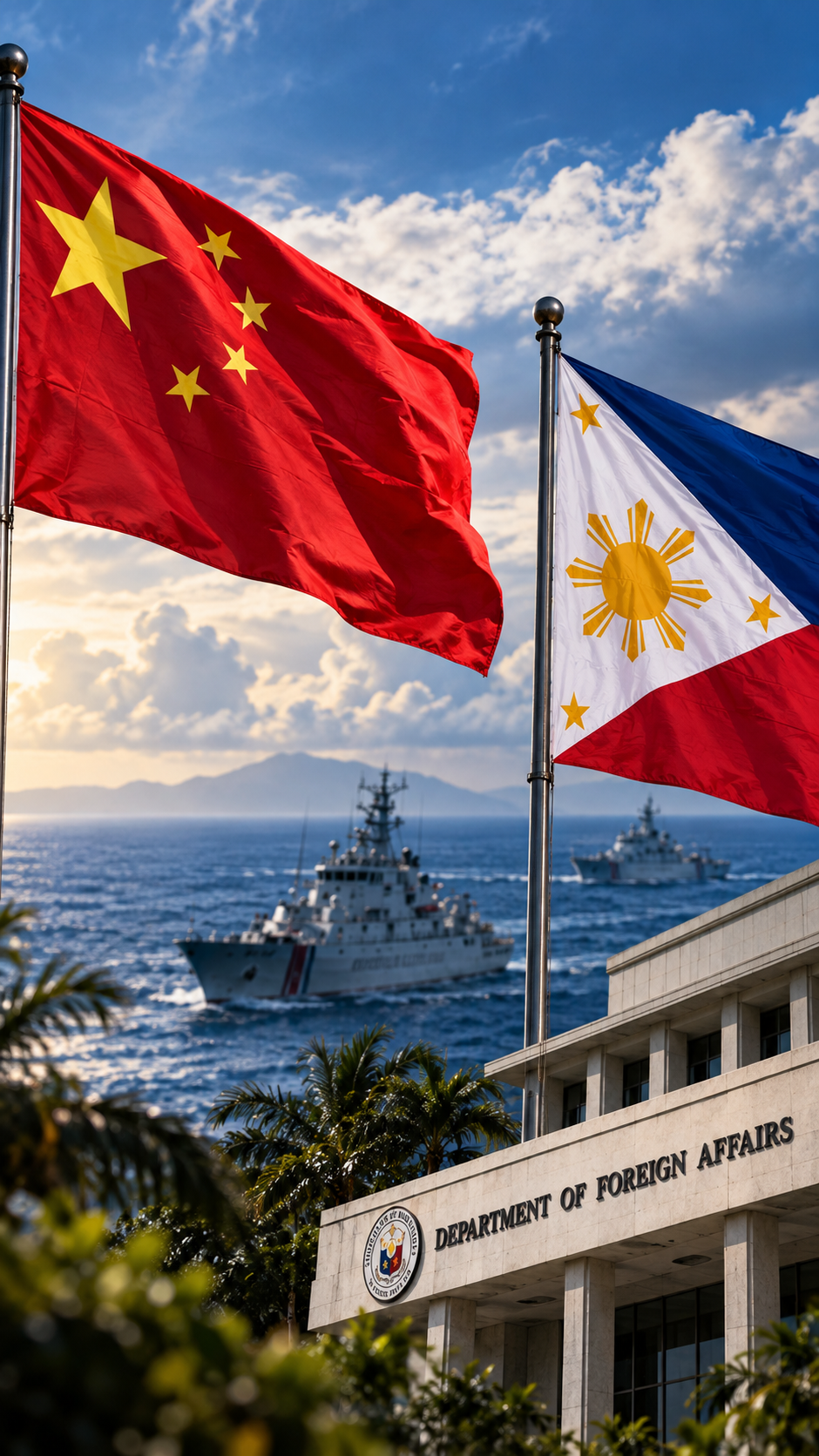
China has denied Philippine accusations that Chinese fishermen used cyanide in the West Philippine Sea, while Chinese Embassy messaging has pushed the blame back toward Filipinos.
Cyanide Bottles Seized Near Ayungin Shoal
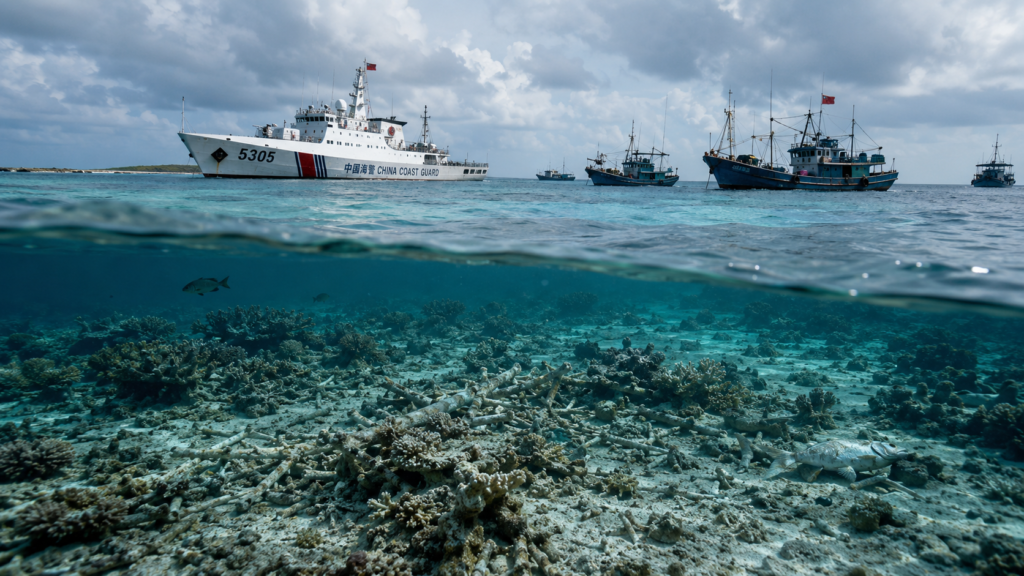
In April 2026, Philippine officials said laboratory tests confirmed cyanide in bottles seized from Chinese boats near Ayungin Shoal the previous year. China rejected the accusation and called it a “stunt,” while saying Chinese fishermen were conducting normal fishing operations.
Guo Wei’s Counter-Accusations
Chinese Embassy Deputy Spokesperson Guo Wei pushed a sharper counter-narrative. According to the Chinese Embassy, the Philippines had “unreasonably harassed” Chinese fishing vessels engaged in “normal operations” in the South China Sea. The embassy also claimed that “not a few Philippine fishermen” use cyanide fishing methods.
The 2024 Scarborough Shoal Case
The incident in April 2026 in Ayungin Shoal is not the first reported case of alleged cyanide fishing by Chinese fishermen in Philippine waters.
In February 2024, the Bureau of Fisheries and Aquatic Resources said Chinese fishermen may have used cyanide at Bajo de Masinloc (Scarborough Shoal). BFAR said the lagoon showed heavy damage and raised the possibility that Chinese and Vietnamese fishermen had used cyanide.
China denied it immediately.
In the 2024 Scarborough denial, Foreign Ministry spokesperson Mao Ning called the accusation “sheer fabrication.” The Chinese Embassy in Manila also called the claim “baseless” and warned that such accusations would heighten tensions.
Mao Ning also presented China as a defender of marine protection.
According to Mao, China does not support practices that harm marine biodiversity.
“The Chinese government attaches great importance to the protection of eco-environment and conservation of fishing resources and resolutely fights against fishing activities that violate laws and regulations,” she said.
That statement would sound more convincing if China did not have one of the most damaging reef records in the South China Sea. The Asia Maritime Transparency Initiative at CSIS found that China has played the largest role in damaging coral reefs through island-building and giant clam harvesting. Dredging and landfill buried thousands of acres of reef under artificial islands, while giant clam harvesting damaged thousands more.
Total reef damage linked to these activities has been estimated at more than 21,000 acres.
So when Beijing lectures Filipinos about “eco-environment” and “conservation,” the question remains: after what China did to the reefs, where does it find the nerve?
The Law Is Clear, Enforcement Is the Hard Part
Cyanide fishing is illegal in the Philippines. Philippine fisheries law bans poisonous substances, including sodium cyanide. Possession of such substances on a fishing vessel can also become evidence of illegal fishing.
The Philippines has cyanide detection mechanisms, including BFAR laboratories, but enforcement is difficult. Cyanide dilutes in seawater, fish can metabolize toxins, and samples must be collected quickly. In open waters, proving a case is much harder than simply observing damaged marine life.
The Philippines does not have a perfect record. But China’s attempt to present itself as the guardian of marine biodiversity is hard to take seriously. Beijing has denied cyanide fishing allegations while carrying a far larger record of reef damage through island-building, dredging, and giant clam harvesting.
The West Philippine Sea is not only a sovereignty issue. It is also a living ecosystem.