The case of Beijing’s Zion Church has entered a new stage, weeks after the release of its founder, Pastor Jin Mingri, also known as Ezra Jin.
Jin’s release in July drew international attention and gave his family reason to celebrate. But the latest development is not about his freedom. It is about the eight Zion Church members who remain in China and are now facing trial.
Their case shows how pressure on independent religious groups can continue even after one prominent pastor is allowed to leave.
The Zion 8 case reaches court
The remaining Zion Church members, often called the “Zion 8” by religious freedom advocates, have been held since the October 2025 case against the church.
According to ChinaAid, defense lawyers received court notices saying the case had been accepted for trial. A pretrial conference was scheduled for August 10, with public hearings set for August 14 to 18.
As of August 16, there has been no confirmed final verdict reported. That means the safest way to describe the case is that the eight members are facing trial, not that they have already been convicted or sentenced.
The defendants reportedly face charges of fraud and illegal business operations. Earlier reporting also linked the broader case to accusations of “illegally using information networks.”
On paper, those charges may sound financial or administrative. But advocacy groups say the accusations are tied to church offerings, religious publications, theological education, and online ministry. That is what makes the case important beyond one congregation.
When church activity becomes a legal case
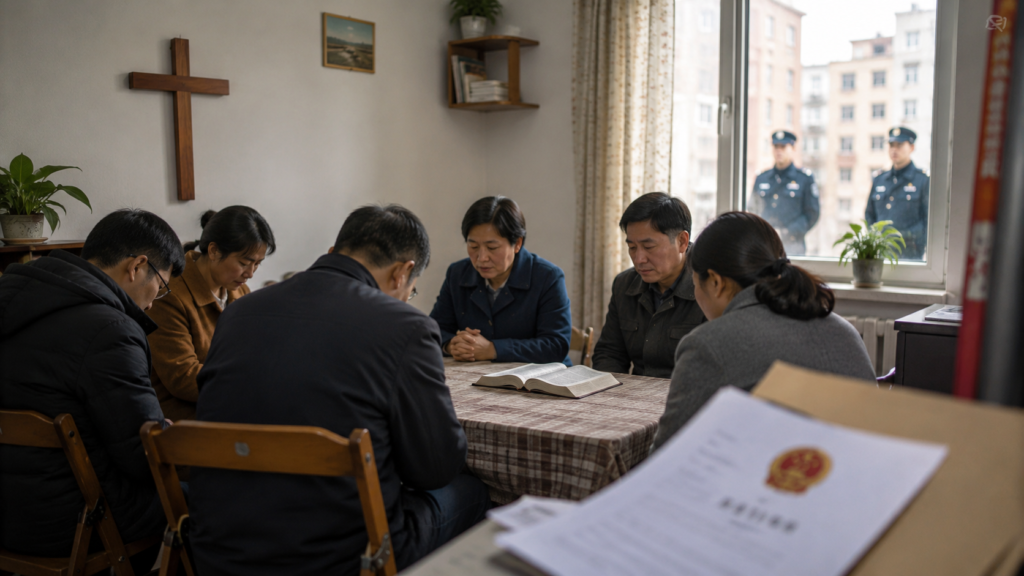
Zion Church is an independent Protestant house church. It operated outside China’s state-approved religious system, where Protestant groups are expected to work under official structures.
For many believers, house churches are not political organizations. They are places to worship, study Scripture, teach theology, collect offerings, and support church life.
But in China, independent religious activity can become risky when it grows beyond state control. Online sermons, seminary-style training, donations, and religious publications can draw official attention.
The Zion 8 case highlights that danger. It suggests that Beijing does not always need to charge believers directly for their faith. It can also use business, fraud, internet, or public-order accusations to restrict religious communities that remain outside official approval.
A family caught in the case
Church in Chains has also highlighted the case of Wu Qiuyu, one of the detained Zion Church members. Her husband, Pastor Yang Jun, has spoken about the pain of separation while she remains in custody.
The report said Wu was arrested in October 2025 while her husband was abroad, leaving the family divided during a long legal process. Since this account comes from an advocacy source, it should be attributed carefully. Still, it gives the case a human face.
Behind the court notices and legal charges are families, children, pastors, church workers, and ordinary believers.
A wider pattern of religious control
The Zion Church case is not isolated. ChinaAid also reported that three leaders of Maizhong Reformed Church in Anhui were sentenced in August over alleged illegal gatherings.
That case is separate from Zion Church, but it points to a similar problem: unregistered Christian communities continue to face pressure when they operate outside state-approved religious channels.
The issue also goes beyond Protestant Christians. Uyghur Muslims, Tibetan Buddhists, underground Catholics, and other communities have faced pressure when their faith, culture, or identity does not fit Beijing’s political demands.