The Philippines is encouraging investment in domestic agriculture through initiatives such as the Balik Agri-OFW Agribusiness and Investment Reintegration Program. Stronger local production could create jobs, support Filipino farmers, and reduce dependence on imported food.
But expanding Philippine agriculture raises another important question: Can locally grown products compete with imports from China in terms of quality, freshness, and price?
Garlic and onions offer some interesting answers.
Philippine garlic: Smaller bulbs, stronger flavor
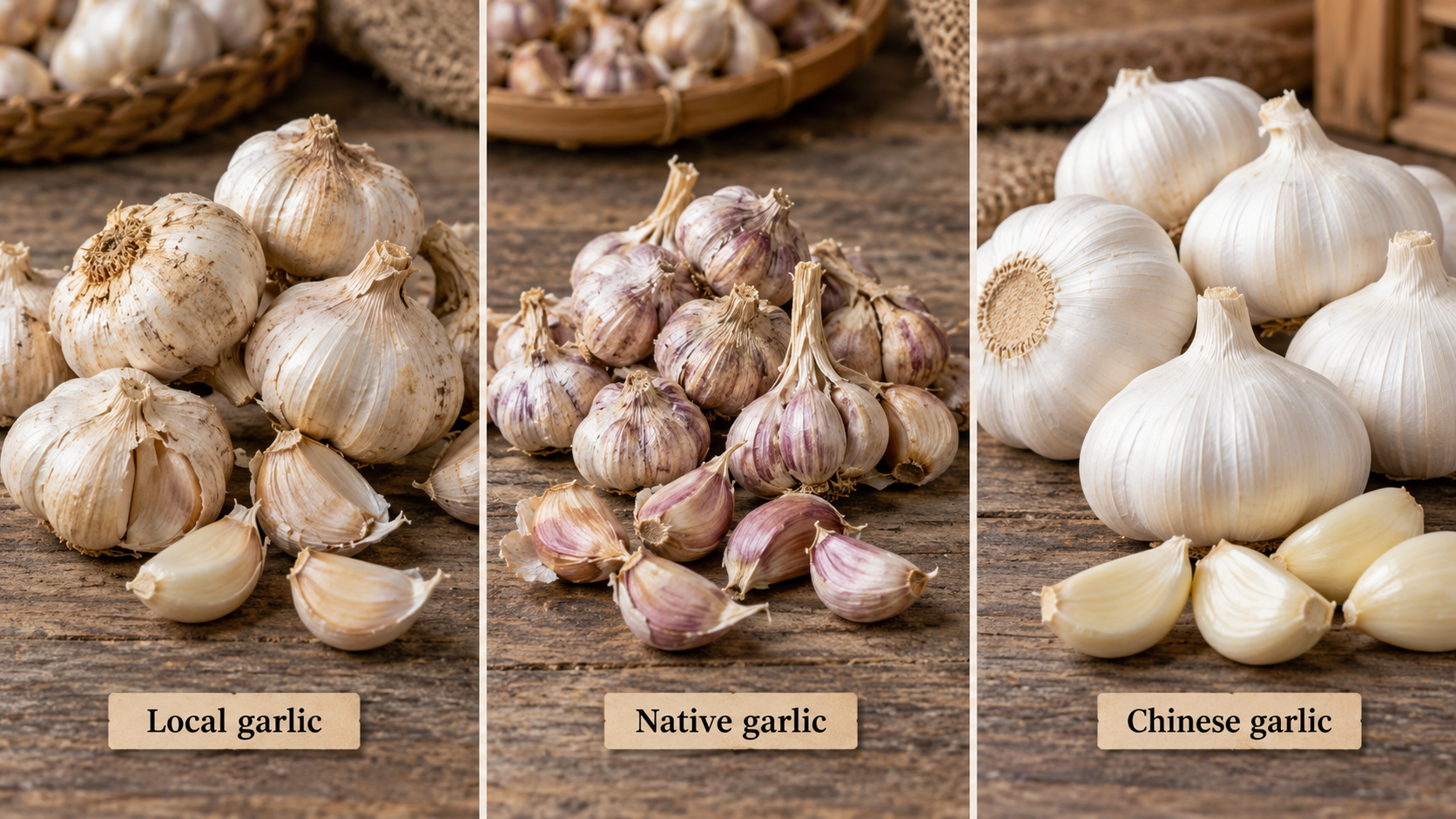
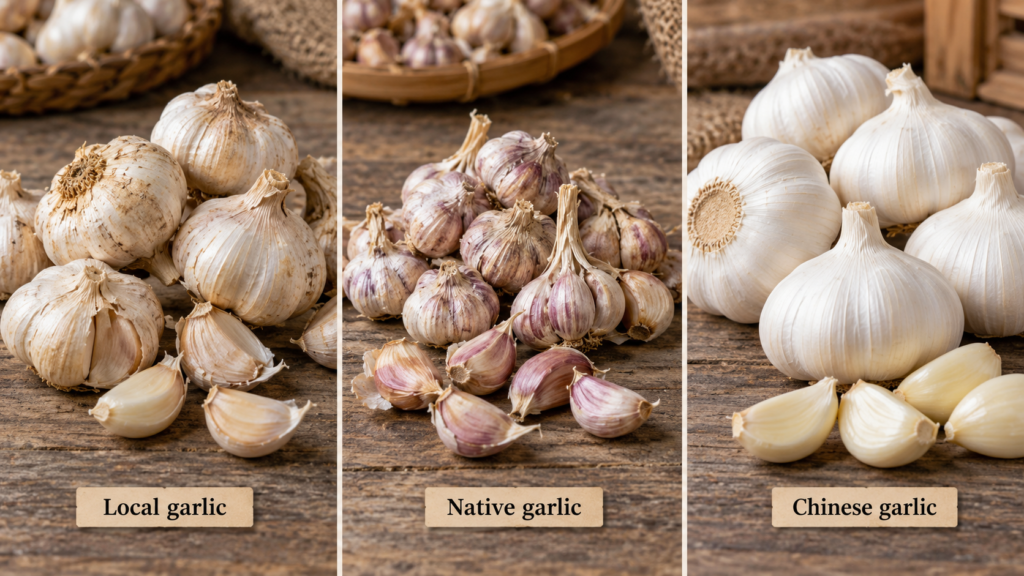
In April 2025, the Department of Agriculture estimated that imports accounted for approximately 95% of garlic consumed in the Philippines. Chinese garlic is widely available, often with large, uniform bulbs. Native Philippine garlic, particularly from Ilocos and Batanes, generally has smaller cloves but is prized for its distinctive aroma and pungent flavor. There is scientific evidence behind that reputation.
A 2021 study by University of the Philippines researchers identified higher concentrations of certain flavor-related compounds in native Philippine garlic than in the imported samples examined. These differences may explain why some Philippine varieties deliver a stronger flavor and aroma, despite their smaller size. The study did not establish that every Philippine variety tastes better than every Chinese variety. Nevertheless, it demonstrates that native garlic possesses valuable qualities that consumers might overlook when comparing appearance and price.
Is imported garlic always cheaper?
Interestingly, official figures suggest otherwise. According to Philippine Statistics Authority data, average national retail prices in March 2026 were:
| Garlic category | Price per kilogram |
|---|---|
| Local garlic | ₱155.33 |
| Imported garlic | ₱159.73 |
| Native garlic | ₱177.00 |
Native garlic commanded a premium, but the broader local garlic category was slightly cheaper than imported garlic. Prices also vary significantly by region, season, and variety. Still, the figures challenge the assumption that imports are invariably the most affordable option.
Philippine vs. Chinese onions: Price and availability
Onions illustrate a different challenge. The Philippines produces red onions domestically but also imports onions, including shipments from China, to supplement supplies. Imports can help stabilize prices during shortages. However, their timing matters because shipments arriving during domestic harvests may put downward pressure on prices received by Filipino farmers.
In November 2025, the Department of Agriculture reported that Chinese onions had an estimated landed cost of approximately ₱60 per kilogram, while retail red onion prices in some Philippine markets exceeded ₱300.
That difference raised questions about supply-chain costs, trading practices, and retail margins. The comparison does not prove that imported onions were cheaper for consumers. Landed costs exclude several expenses incurred before products reach supermarket shelves or market stalls.
Unlike garlic, there is insufficient comparable scientific evidence to conclude that Philippine onions generally offer superior flavor or nutritional quality. Freshly harvested local onions may have advantages in freshness, but variety, storage conditions, and handling remain important.
Are locally grown vegetables fresher and healthier?
Locally harvested vegetables can reach consumers sooner, particularly when farms supply nearby markets directly. That may mean less time in storage and better retention of desirable qualities such as texture, appearance, and flavor.
However, Philippine produce is not automatically fresher. Vegetables transported across several islands or stored improperly can deteriorate, while efficiently handled imports may arrive in good condition.
The same caution applies to food safety. Agricultural products from both countries can be affected by pesticide residues, microbial contamination, or unsuitable handling practices. The Philippines’ Bureau of Plant Industry monitors pesticide residues in locally produced and imported agricultural commodities.
Without comprehensive, comparable testing results, it would be misleading to claim that Philippine vegetables are generally safer than Chinese imports.
Does local produce have a smaller environmental footprint?
Shorter supply chains can reduce transportation requirements and help limit certain food losses. However, the environmental comparison is not straightforward.
Research summarized by Our World in Data shows that agricultural production methods and land use usually account for more greenhouse gas emissions than food transportation. Large cargo ships also transport goods relatively efficiently.
Therefore, Philippine produce does not automatically have a smaller carbon footprint than imports. Farming practices, refrigeration, storage, transport methods, and food waste all influence the result.
The real value of Philippine produce
Chinese imports can offer competitive prices, consistent supplies, and varieties that may be difficult or expensive to produce locally. Yet Philippine products also have advantages worth recognizing. Native garlic provides a scientifically supported example of distinctive flavor characteristics, while locally harvested vegetables may offer better freshness when properly handled.
Choosing Philippine produce also supports domestic growers and the businesses connected to them. Supporting Philippine agriculture does not necessarily mean sacrificing quality or paying more. Sometimes, locally grown products can offer equal or better value, along with benefits for farmers and the wider economy.