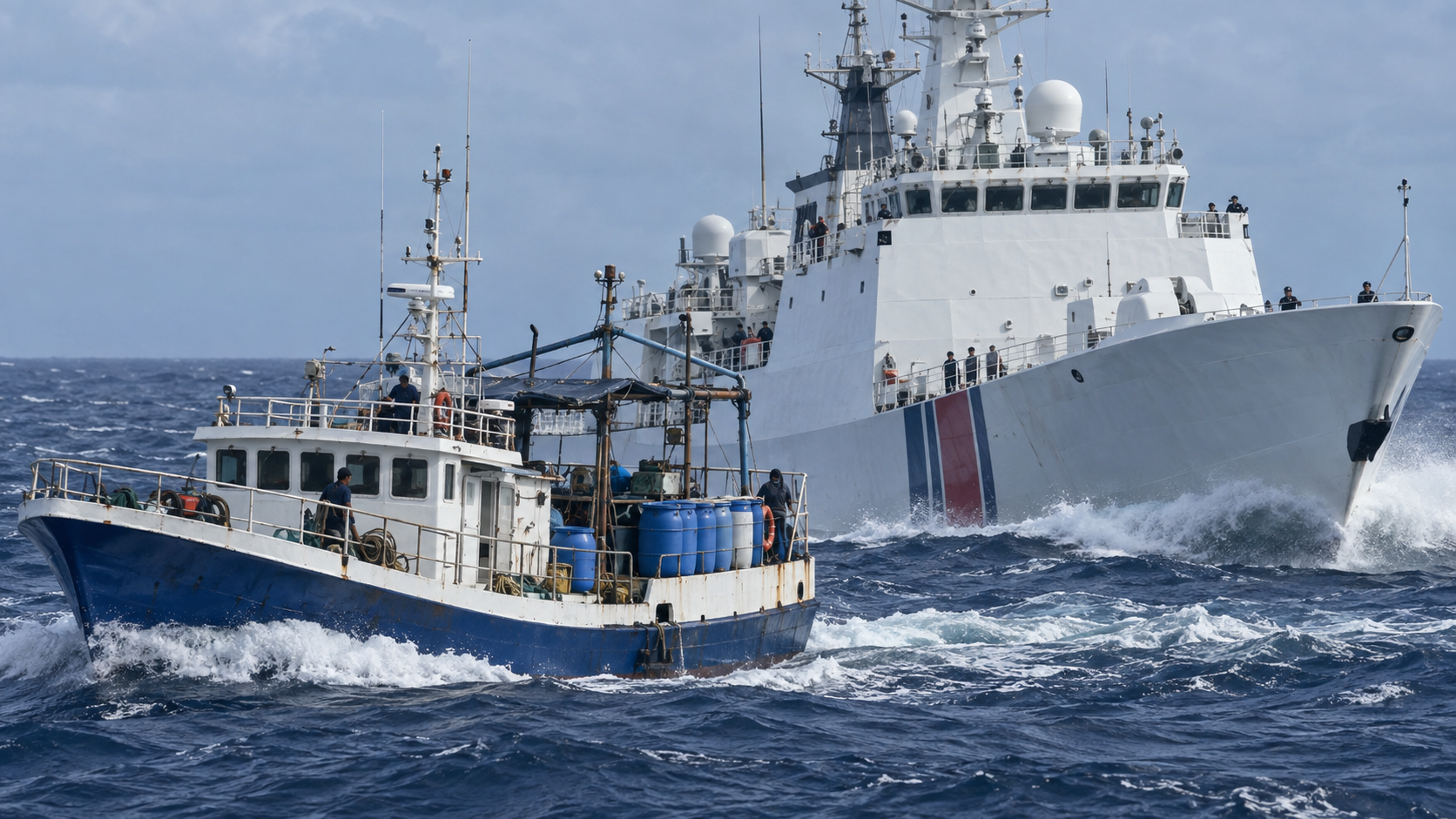
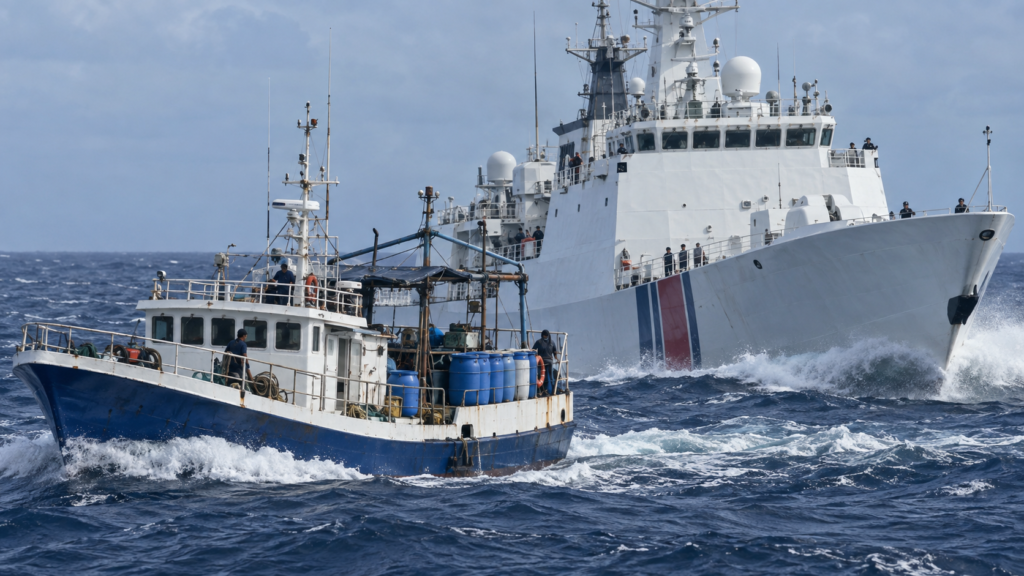
A Chinese coast guard ship rammed a Philippine fisheries vessel just 54 nautical miles from Palawan on September 18, marking the most serious incident in nearly two weeks of rising tension in the West Philippine Sea.
The BRP Datu Magat Salamat, operated by the Bureau of Fisheries and Aquatic Resources, was delivering fuel assistance to Filipino fishers near Abad Santos Shoal. The Philippine Coast Guard said China Coast Guard vessel CCG-21585 repeatedly approached the ship before striking it.
The collision damaged railings and deck structures, although no injuries were reported. Philippine officials described the operation as a civilian livelihood mission conducted inside the country’s exclusive economic zone.
China blamed the Philippine vessel, claiming it ignored warnings and crossed the coast guard ship’s path. Both sides released footage to support their accounts.
Flares fired near an unarmed aircraft
The ramming followed another confrontation involving a Philippine surveillance mission.
On September 7, an unarmed PCG aircraft was conducting a maritime domain awareness flight over the Kalayaan Island Group. According to the PCG, Chinese forces fired several flares near the aircraft as it monitored Zamora and Panganiban reefs, internationally known as Subi and Mischief reefs.
Flares can serve as visual warnings, but discharging them near an aircraft creates an obvious safety risk. The PCG said the incident would not stop its surveillance flights.
Two days after disclosing the encounter, the Department of Foreign Affairs called on China to end its “illegal occupation and activities” at both reefs.
The legal circumstances of the two features differ. The 2016 arbitral tribunal found that Mischief Reef is a low-tide elevation within the Philippine EEZ and continental shelf. China has nevertheless transformed it into a fortified artificial island with a runway, port and military facilities.
Chinese ships remain around key features
From September 15 to 21, the AFP monitored 35 Chinese ships around four locations. Sixteen were near Bajo de Masinloc, 11 around Ayungin Shoal, four at Escoda Shoal and four near Pag-asa Island.
The total included 14 Chinese naval vessels. Their presence shows that the latest ramming did not occur in isolation, even though the weekly count had declined from earlier monitoring periods.
Philippine authorities have also tracked Chinese research ships. The AFP found no evidence that the drilling-capable Haiyang Dizhi Shihao drilled during its 28 days near Bajo de Masinloc. Its extended presence still raised concern because Manila had issued no permit for marine scientific research.
A collision close to Palawan
Many previous confrontations occurred around distant outposts such as Ayungin Shoal or Bajo de Masinloc. The September 18 collision happened roughly 100 kilometres from Palawan.
The DFA said China’s actions violated its obligations under the UN Convention on the Law of the Sea. It also cited international regulations for preventing collisions and protecting safety at sea.
The United States, Canada and European Union expressed concern over the incident. They called for respect for international law and criticised actions that endangered the Philippine vessel.
The location also matters for Filipino fishers. The Datu Magat Salamat was not carrying military supplies to a contested outpost. It was distributing fuel intended to help fishermen continue working in waters where Chinese vessels increasingly challenge Philippine activity.
Manila considers new deterrent measures
Defense Secretary Gilberto Teodoro Jr. called the ramming an unacceptable breach of international law. On September 21, he said the government would develop measures to deter similar incidents, although he did not disclose what they might involve.
Possible responses could include stronger escorts, changes to civilian missions and improved maritime surveillance. The Philippines is already expanding its use of drones, which could help detect approaching vessels and document encounters. However, drones can provide information but cannot physically protect ships or enforce Philippine rights.