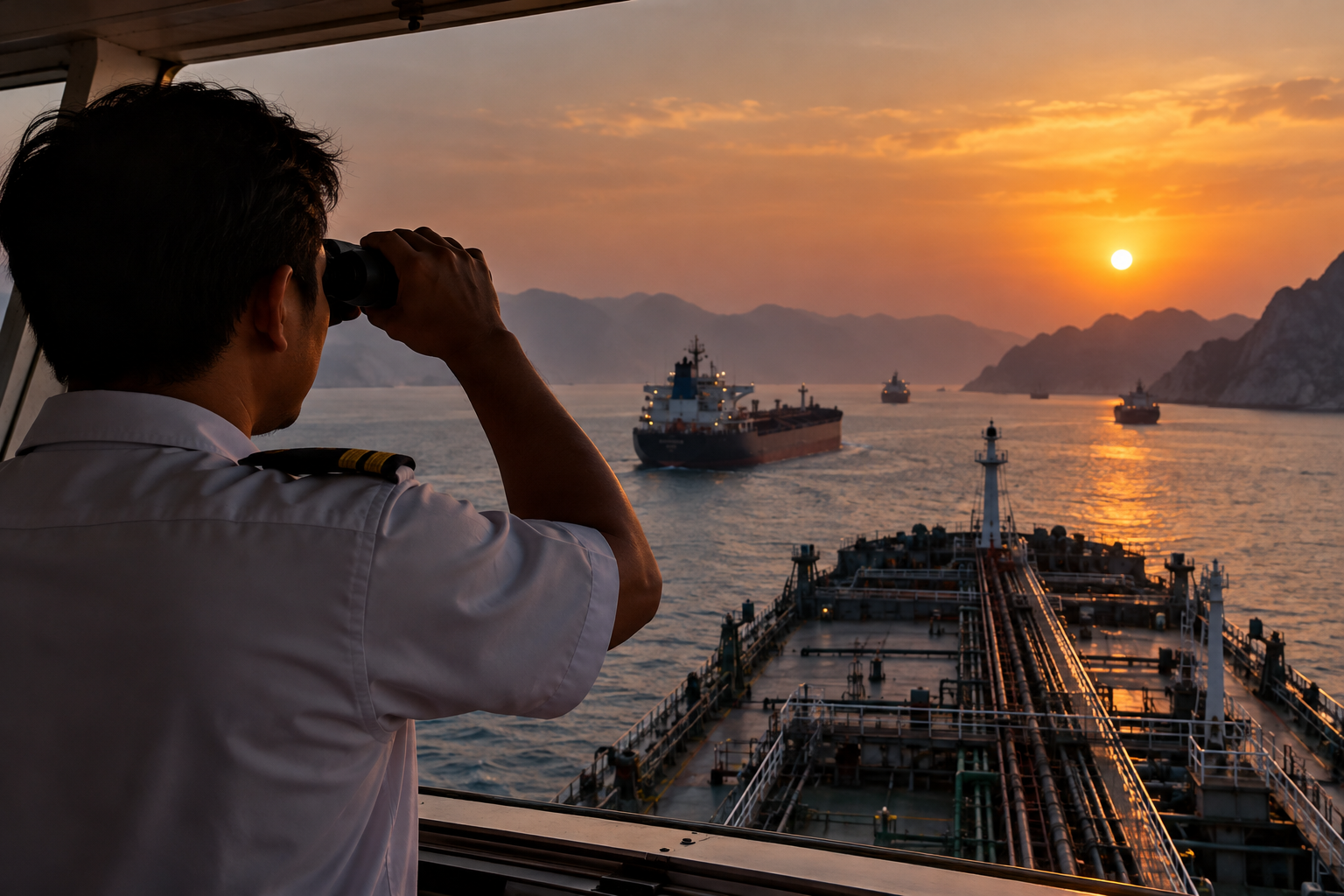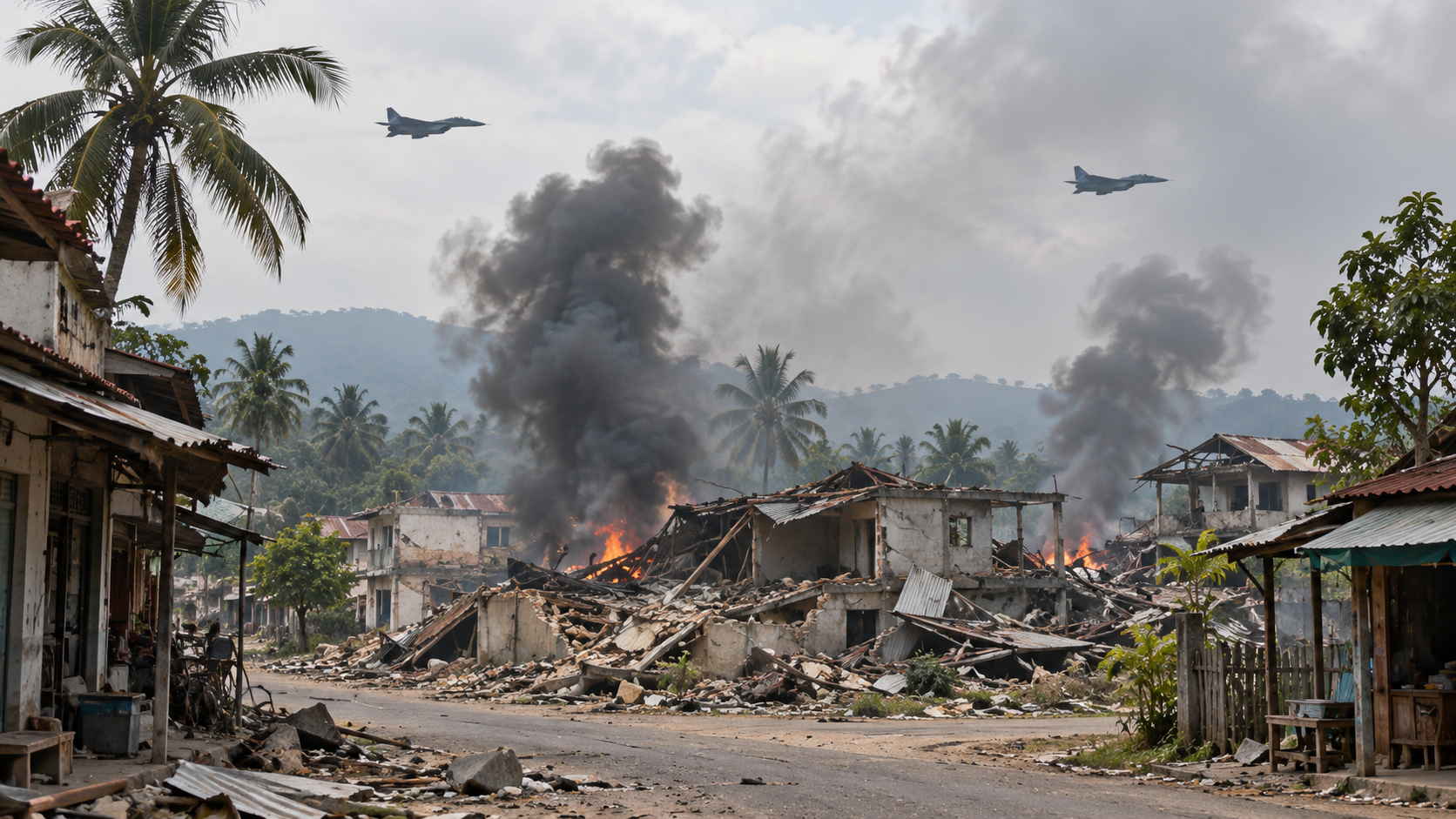
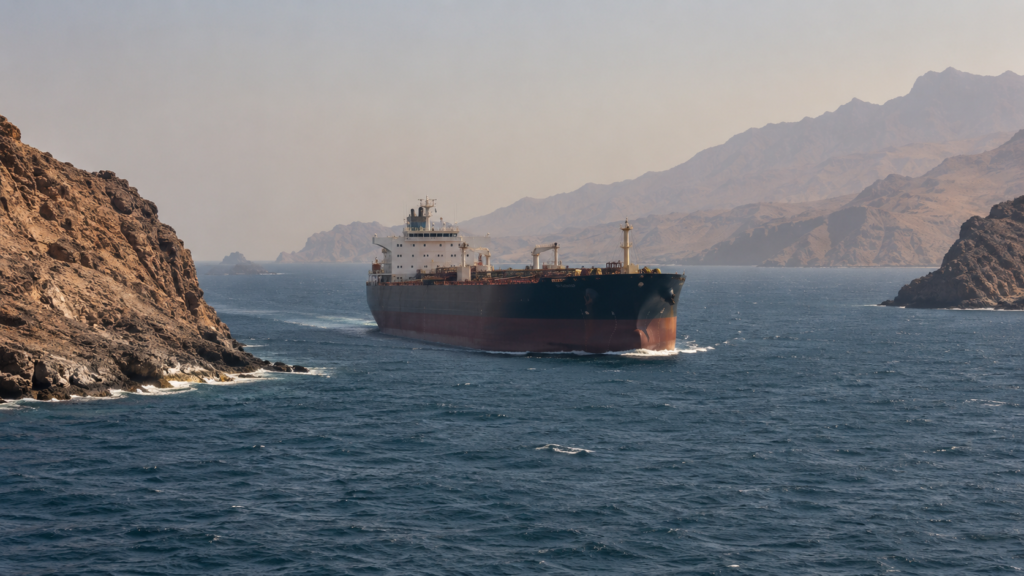
Houthi territorial gains along Yemen’s Red Sea coast have brought renewed attention to the Bab el-Mandeb Strait, one of the world’s most important shipping routes.
The advance comes as fighting in Yemen intensifies and Saudi Arabia faces pressure on both its oil infrastructure and maritime export routes. For global shipping, the concern is whether another major chokepoint could become increasingly difficult or expensive to navigate. For Filipino seafarers, it also revives memories of repeated Houthi attacks on ships carrying Filipino crews.
Houthi gains put a maritime chokepoint under pressure
Houthi forces have seized large parts of Yemen’s Red Sea coastline, including the port of Mocha and strategic territory near Bab el-Mandeb. They also captured Perim, or Mayun, an island positioned inside the strait, giving the group a stronger foothold close to international shipping lanes.
The offensive has since moved toward highland areas in Taiz and Lahij provinces. Control of this terrain could help consolidate Houthi control of the coast and separate Saudi-backed forces there from territory farther east.
Bab el-Mandeb connects the Red Sea and Suez Canal with the Gulf of Aden and Indian Ocean. Ships travelling between Asia and Europe can avoid it by sailing around the Cape of Good Hope, but doing so adds distance, fuel use, insurance costs and delays.
Around 8.1 million barrels per day of crude oil and petroleum products passed through Bab el-Mandeb in the second quarter of 2026, according to the US Energy Information Administration. That was significantly higher than before the latest Middle East conflict disrupted traffic through the Strait of Hormuz.
International concern is growing. Italy has prepared naval measures to protect its merchant shipping, while Britain has agreed to provide limited refuelling support to Saudi aircraft.
From Yemen’s civil war to a threat to global trade
The Houthis seized Yemen’s capital, Sanaa, in 2014. Saudi Arabia intervened the following year at the head of a coalition supporting Yemen’s internationally recognised government.
A UN-mediated truce in 2022 sharply reduced fighting but did not produce a final political settlement.
The conflict later gained a major maritime dimension when the Houthis began attacking commercial vessels during the Gaza war. They initially said their campaign targeted ships connected with Israel, but attacks eventually affected vessels with much wider international ownership and crews.
The latest escalation has again reached Saudi territory. On September 19, the Houthis claimed missile and drone attacks on targets in Riyadh and on an Aramco facility at Yanbu. Saudi forces said they intercepted a ballistic missile aimed at Riyadh and stopped several other attacks.
Saudi oil routes face pressure from both directions
Saudi Arabia has increasingly relied on its East-West pipeline to move crude from eastern production areas to the Red Sea, avoiding the Strait of Hormuz.
A drone attack from Shiite militias in Iraq on September 13 temporarily halted crude shipments through the pipeline.
Saudi Aramco subsequently increased exports from terminals on the Persian Gulf. Oil flows through Hormuz rose to about 2.9 million barrels per day in September, while producers also expanded ship-to-ship transfers near Oman.
The result is an unusual squeeze: Hormuz remains exposed to the wider Iran conflict, while Houthi gains have increased uncertainty around the Red Sea route.
Oil prices remain sensitive to every military and diplomatic development. Brent crude was trading above $100 a barrel on September 22.
Filipino crews have already experienced the Red Sea threat
In November 2023, the Houthis seized the Galaxy Leader. Its 17 Filipino seafarers were held for 428 days before being released in January 2025.
In March 2024, a Houthi missile struck the True Confidence in the Gulf of Aden. The vessel carried 15 Filipinos; two were killed and three seriously injured.
Three months later, an explosive-laden unmanned vessel struck the MV Tutor. Twenty-one of its 22 Filipino crew members were rescued. The remaining seafarer, engineer Nixon Asejo, was lost with the vessel.
Other Filipino-crewed ships also came under attack. All 27 Filipinos aboard the Transworld Navigator survived after the vessel was hit three times in June 2024, while 17 Filipinos aboard the MV Groton escaped injury after a ballistic missile strike that August.
The danger returned in July 2025. All 17 Filipino crew aboard the Magic Seas survived an armed Houthi assault before the vessel sank. The following day, the Eternity C was attacked and sunk with 21 Filipinos aboard. Three were later confirmed dead, one remained missing, eight were rescued, and nine spent almost five months in Houthi captivity.
Protection as the risk spreads
The Department of Migrant Workers has repeatedly urged shipping companies to divert vessels away from the Red Sea and Gulf of Aden. Filipino seafarers assigned to designated high-risk or warlike areas also have the right to refuse such voyages.