Filipino doctor Juan Carlos “Caloy” Manalo remained missing as of the latest Philippine government update on September 12. More than two weeks had passed since a catastrophic flood struck the Nepal–Tibet border.
His disappearance has left his family waiting for answers. It has also drawn attention to China’s tight control over information from the Tibetan disaster zone.
Manalo, 30, comes from Tarlac City. His family last heard from him on August 25, one day before the flood. He was travelling with an Isha Foundation pilgrimage group bound for Mount Kailash.
Last reported on the Tibetan side
The group’s last reported location was the immigration complex at Gyirong Port. The facility stands inside China’s Tibet Autonomous Region, across the border from Nepal.
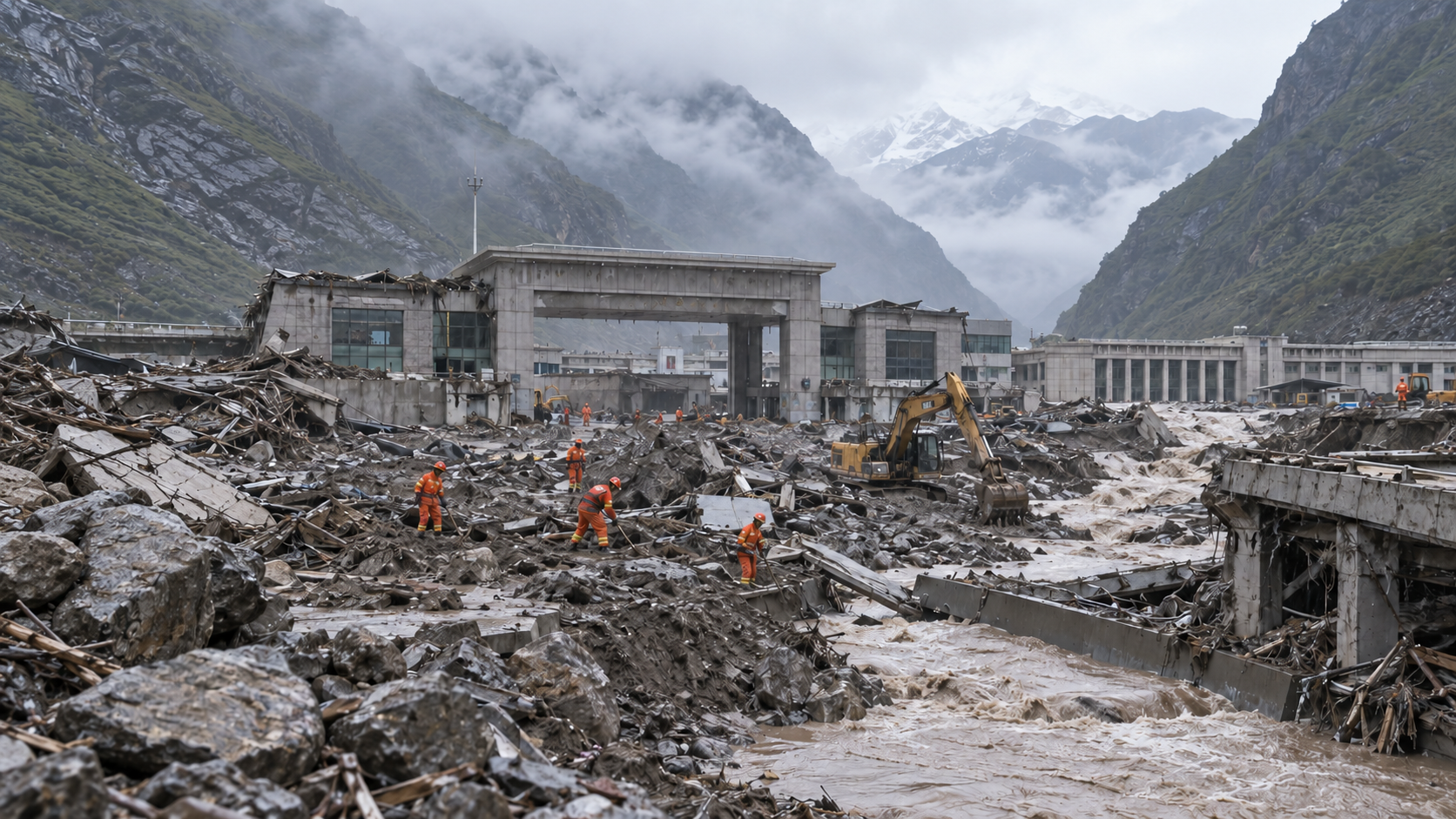
Water, mud and debris swept through the narrow valley on August 26. The disaster destroyed the border complex and surrounding infrastructure. Even the five-storey Chinese customs building disappeared beneath the wreckage.
The Philippine Embassy in New Delhi continues to coordinate with Nepalese authorities and responders. It is also helping Manalo’s family provide DNA information for the identification process.
However, describing him simply as “missing in Nepal” leaves out an important detail. His group was last reported on the Chinese-controlled side of the border.
Updates become increasingly sporadic
As of September 15, China continued to report 43 deaths and 519 missing people in Tibet. The missing included many foreign nationals. Nepal reported 1,386 deaths and 5,130 people still unaccounted for.
Chinese rescuers have searched the Gyirong ruins with excavators, radar and other equipment. Authorities have also recorded fingerprints, tattoos and recovered personal possessions.
The scale of the destruction helps explain the slow progress. Officials estimate that the flood deposited 2.2 million tonnes of debris across the affected valleys.
Yet physical obstacles do not explain the lack of regular information. Reuters reported on September 15 that the initially steady flow of search updates had slowed. Families from several countries now receive only sporadic news.
Some relatives have formed online groups, contacted hospitals and provided DNA samples. Many still do not know which locations authorities have searched or what investigators have found.
China says it is coordinating with foreign governments. Its Foreign Ministry also said authorities would inform relatives promptly and had established a hotline for families worldwide.
China controls reporting from Tibet
Independent scrutiny remains heavily restricted. China initially allowed state media to cover the Tibetan disaster area. International journalists later visited Gyirong through a closely managed government tour.
Reports about the flood also faced restrictions online. WeChat reportedly deleted or blocked posts containing unofficial information. Tibetan police announced ten cases against people accused of spreading “rumours” about casualties.
China has a legitimate reason to combat false reports during an emergency. Fabricated figures can create panic and interfere with rescue work. Yet punishing unofficial accounts while restricting journalists does not build public trust.
There is no evidence that Chinese censorship caused Manalo’s disappearance or directly prevented rescuers from finding him. The enormous destruction makes the search extraordinarily difficult.
Nevertheless, secrecy deepens the uncertainty. When thousands remain missing, transparency becomes part of the humanitarian response. Manalo’s family deserves clear information from every government involved, especially China, where his pilgrimage group was last reported before the flood.