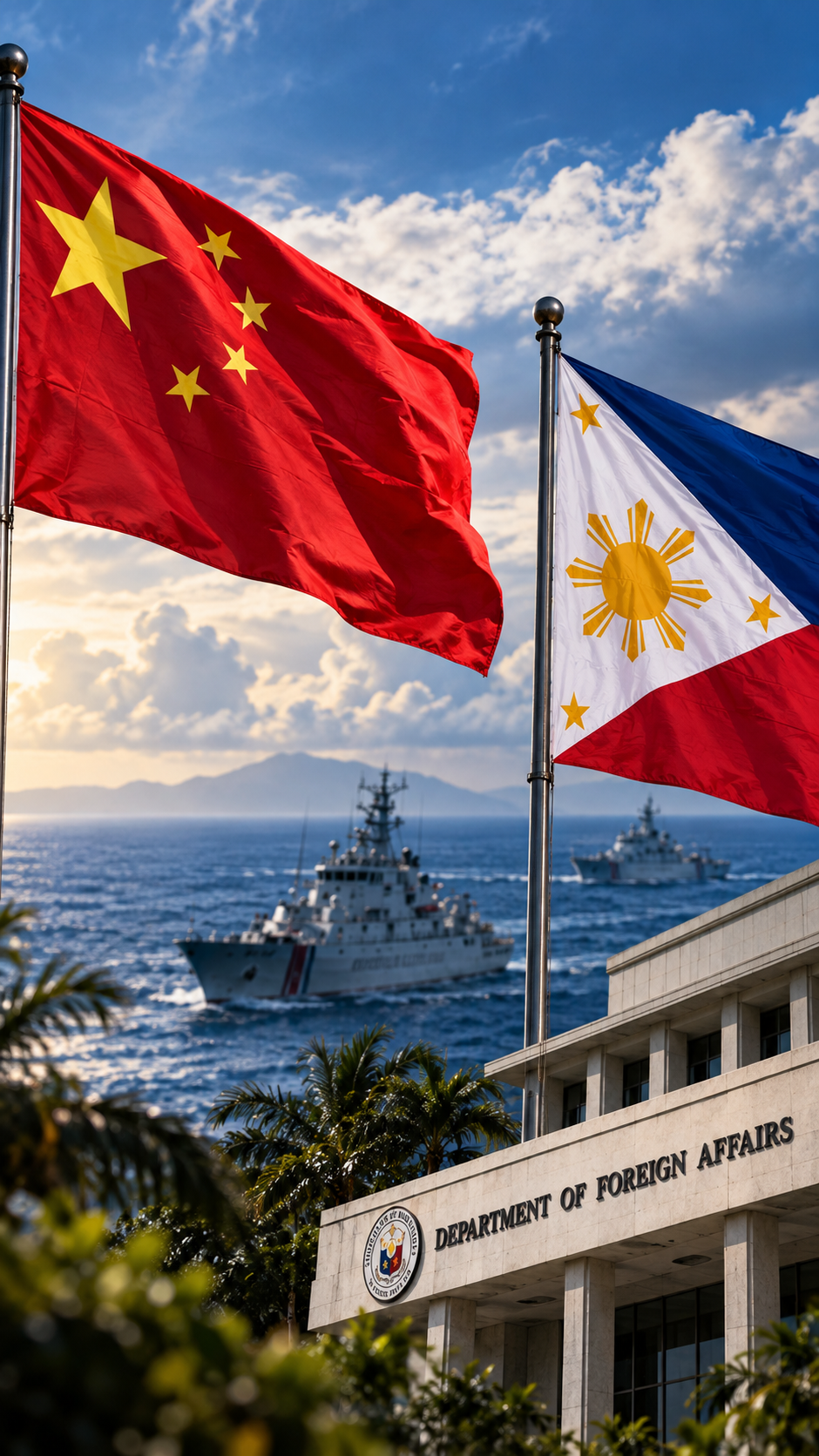
The Philippines plans to expand its military drone capabilities as Chinese vessels maintain a regular presence in contested waters. Defense Secretary Gilberto Teodoro Jr. announced the move on August 25 as part of the country’s shift from internal security towards territorial defence.
The Armed Forces of the Philippines already uses unmanned aircraft for intelligence and surveillance. However, Teodoro said it needs more advanced systems, secure communications and stronger networks.
The Philippines already has drones at sea
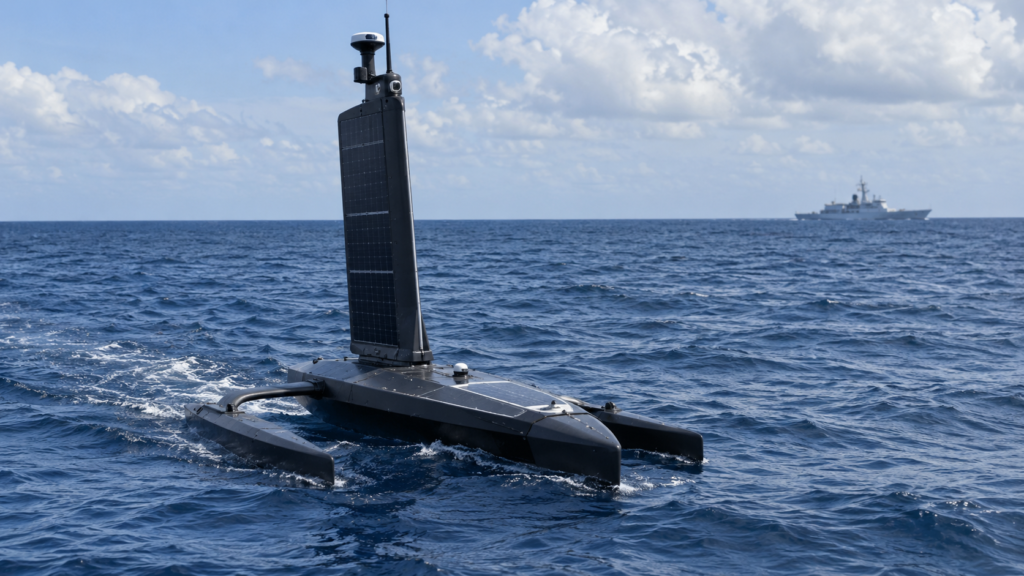
In June, the United States transferred four Ocean Aero Triton unmanned maritime vehicles to the Philippine military. The package was valued at $13 million.
Unlike familiar aerial drones, Tritons operate on and beneath the water. They use solar and wind power and can remain deployed for up to 30 days without a crew.
Their endurance could make them useful around Ayungin Shoal, Bajo de Masinloc and other frequently monitored areas. A patrol ship must carry sailors, fuel and supplies. An unmanned system can remain at sea longer while sending information to operators elsewhere.
Four vehicles cannot monitor the entire Philippine exclusive economic zone. They can, however, help the military test the technology under real conditions.
Closing gaps in maritime surveillance
Philippine ships and crewed aircraft cannot remain at every disputed feature around the clock. Drones could track vessels, record their movements and alert authorities when unusual activity begins.
Underwater systems could also monitor seabed activity, communications cables and threats below the surface.
The recent case of the Chinese survey vessel Haiyang Dizhi Shihao illustrates the problem. On September 4, the Philippine Coast Guard said the drilling-capable ship had spent 25 days inside the Philippine EEZ without a research permit. That included three weeks near Bajo de Masinloc.
The ship reportedly turned off its automatic identification system at times. Philippine authorities continued following it through Canada’s satellite-based Dark Vessel Detection program. Maritime drones could complement such monitoring with closer observations.
Collecting evidence of gray-zone activity
China often relies on coast guard, research and maritime militia vessels rather than sending naval warships alone. This makes encounters harder to classify and allows Beijing to present its operations as civilian or law-enforcement activity.
Drones could collect photographs, video and location data over long periods. The information could help distinguish innocent passage from prolonged loitering or possible surveying.
It could also support Manila’s transparency campaign and diplomatic protests. The Philippines had filed 39 protests concerning Chinese actions in the West Philippine Sea by early September.
Better evidence will not necessarily change Beijing’s conduct. It would, however, help the Philippines document what is happening in its waters and challenge conflicting accounts.
Drones cannot enforce maritime rights
Drones cannot replace coast guard cutters, naval vessels or aircraft. They can identify a ship, but they cannot conduct resupply missions, assist Filipino fishers or enforce Philippine law by themselves.
They are also vulnerable to severe weather, communication failures, electronic jamming and cyberattacks. China has considerable capabilities in these areas.
Information also has limited value if commanders cannot receive, analyse and share it quickly. This explains Teodoro’s emphasis on secure communications and integrated networks. He warned that drone systems, particularly those using artificial intelligence, could be compromised.
Building a sustainable Philippine capability
The government has proposed ₱50 billion for military modernisation in 2027, up 25 percent from the current allocation. Teodoro did not identify the drone systems being considered, citing security concerns.
The Philippines has contacted countries with extensive drone experience. Ukraine and Manila have discussed possible technological cooperation, although they have announced no specific acquisition agreement.
Domestic production could eventually reduce costs, simplify maintenance and limit dependence on foreign suppliers. Reaching that point will require sustained investment, technical expertise and trained personnel.
Drones could make surveillance in the West Philippine Sea more continuous and better documented. Their greatest contribution would be reducing gaps in what the country can see. But surveillance does not create control. The Philippines will still need enough ships, aircraft and personnel to act on the information its drones collect.