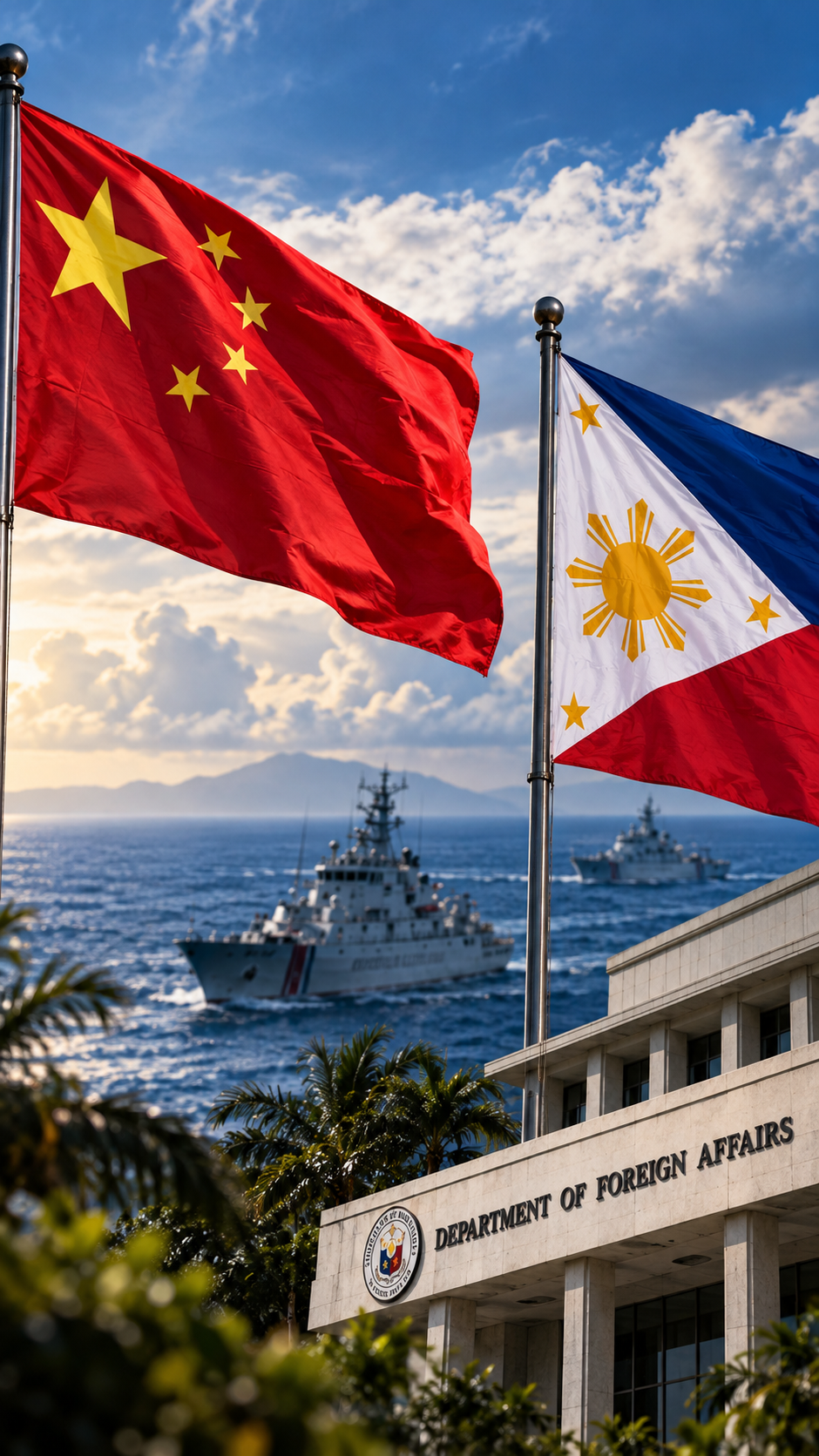
Relations between the Philippines and China have reached another low point after Chinese Ambassador Jing Quan suggested that Beijing could easily defeat Manila in a military confrontation. His remarks prompted a formal diplomatic protest on October 19 and renewed calls to declare him persona non grata.
The dispute has grown increasingly confrontational. The Chinese Embassy challenged Philippine lawmakers to follow through on their threats of expulsion, while Manila accused the ambassador of using inappropriate and intimidating language.
The controversy is the latest in a series of diplomatic confrontations involving Chinese representatives, raising questions about the future of relations between the two neighbors.
What did Ambassador Jing Quan say?
The controversy began on October 15, when Jing responded to Philippine Defense Secretary Gilberto Teodoro Jr.’s description of China as a regional troublemaker.
“If we want to use force, we may easily win,” Jing told reporters, before emphasizing that Beijing would not choose force because it preferred peace.
President Ferdinand Marcos Jr. described the statement as sounding like a threat and questioned whether such language was appropriate for a diplomat.
On October 19, Foreign Secretary Ma. Theresa Lazaro summoned Jing to formally convey Manila’s objections. She described his remarks as provocative and unacceptable, warning that they could further damage an already sensitive relationship.
The Department of Foreign Affairs (DFA) also defended the right of Philippine officials and legislators to criticize foreign governments without facing intimidation.
China rejected the accusations, arguing that Jing’s comments had been selectively quoted and taken out of context. Beijing maintained that his message emphasized China’s preference for peace rather than military confrontation.
Previous controversies involving Chinese ambassadors
The latest confrontation recalls an incident involving Jing’s predecessor, Ambassador Huang Xilian.
In April 2023, Huang advised Manila to oppose Taiwanese independence if it genuinely cared about approximately 150,000 Filipino workers living in Taiwan.
His remarks followed China’s criticism of expanded American access to Philippine military facilities under the Enhanced Defense Cooperation Agreement.
Philippine lawmakers interpreted Huang’s comments as an implicit warning about the safety of overseas Filipino workers.
The Chinese Embassy denied that he had threatened Filipinos, while Marcos suggested there might have been a misunderstanding or translation issue.
Another controversy emerged in May 2024, when the Chinese Embassy publicized an alleged recorded telephone conversation with Philippine Vice Admiral Alberto Carlos.
The recording supposedly concerned informal arrangements governing Philippine resupply missions to Ayungin Shoal.
Carlos disputed the alleged agreement and accused the Chinese side of recording the conversation without his consent. National Security Adviser Eduardo Año called for the expulsion of diplomats involved.
The allegations remained contested, but the episode further damaged trust between the two governments.
From sanctions to another diplomatic summons
Diplomatic tensions intensified in June 2026 when Beijing imposed sanctions on Defense Secretary Teodoro and his immediate family.
China accused him of making irresponsible statements that undermined its interests. The sanctions barred Teodoro and his family from entering mainland China, Hong Kong and Macau.
Manila condemned the measures as an unfriendly act that further complicated bilateral relations.
Jing himself was summoned by Marcos on July 21, following a violent encounter at Ayungin Shoal involving Chinese Coast Guard personnel and Philippine Navy sailors.
The meeting also addressed Philippine concerns over an AI-generated video circulated by Chinese state-run media that portrayed Filipinos as monkeys.
Marcos subsequently expressed hope for a reset in relations and stressed the importance of avoiding further confrontations.
However, the latest dispute suggests that efforts to stabilize relations have achieved limited progress.
Maritime tensions add to the diplomatic dispute
The confrontation has unfolded against continuing tensions in the West Philippine Sea, where Chinese and Philippine vessels regularly encounter one another.
On October 20, China’s military accused the American warship USS Charleston of illegally entering waters near Sabina Shoal and deployed naval forces to monitor it.
The Philippine military rejected China’s interpretation, defending the right to navigate international waters.
The incident highlights how disagreements over maritime rights continue to complicate relations among Manila, Beijing and Washington.
Could the Philippines declare Jing Quan persona non grata?
The ambassador’s remarks have prompted several Philippine lawmakers to demand stronger action.
On October 19, Senator Erwin Tulfo filed a resolution urging the DFA to recommend declaring Jing persona non grata. Other senators, including Risa Hontiveros, have also supported proposals for his removal.
The Chinese Embassy responded defiantly to the growing calls
In an October 17 social media statement, it questioned whether the lawmakers’ proposals amounted to threats or coercion, before issuing a direct challenge:
“But anyway, just do it. Otherwise, STOP BLUFFING.”
The unusually confrontational response added another dimension to the dispute, drawing criticism from Philippine officials.
Beijing also accused some Philippine politicians of exaggerating the China threat and damaging bilateral relations for political purposes.
Manila remains cautious about expulsion
Despite growing pressure from lawmakers, the Marcos administration has avoided endorsing Jing’s removal.
Malacañang indicated on October 19 that the President preferred maintaining diplomatic engagement and would leave the matter to the DFA.
The department stressed that sensitive issues should be handled through established diplomatic channels, while reserving the right to pursue further action.
As of October 20, no additional meeting between Marcos and Jing had been scheduled following the ambassador’s latest remarks.
What would expelling the ambassador mean?
Under Article 9 of the Vienna Convention on Diplomatic Relations, a country can declare a foreign ambassador persona non grata at any time, without having to explain its decision.
China would then be required to recall Jing or terminate his diplomatic functions. If Beijing failed to act within a reasonable period, Manila could refuse to recognize him as a diplomat.
Such a decision would constitute a serious diplomatic rebuke, although it would not automatically sever relations between the countries.
Beijing could retaliate by expelling Philippine diplomats, reducing diplomatic engagement or taking other measures. However, no specific retaliatory action has been confirmed.
Expelling Jing could demonstrate Manila’s determination to defend its sovereignty and demand respect from foreign representatives.
On the other hand, it might further complicate negotiations over maritime disputes, trade and other bilateral issues.
There is also no guarantee that replacing the ambassador would change Beijing’s policies or its approach to the West Philippine Sea.
Declaring Jing persona non grata would send a powerful diplomatic message. Whether it would produce meaningful changes in Beijing’s behavior is a different question.