The Philippines marked West Philippine Sea Victory Day on July 12 with public commemorations that turned a legal anniversary into a visible national moment.
This year carries special weight. July 12, 2026 marks 10 years since the Philippines won its arbitral case against China, a ruling that rejected Beijing’s sweeping claims where they exceeded what international law allows. But a decade later, the anniversary is no longer being remembered only through legal statements and diplomatic speeches.
The national commemoration also follows a growing local push to recognize July 12 more formally. Palawan declared the date West Philippine Sea Victory Day at the provincial level in 2024, while Cebu City recently approved its own declaration and urged wider national recognition. Labrador, Pangasinan has also adopted the observance, including an education component for schools.
Horns Sound for the Arbitral Victory
One of the most symbolic commemorations was the simultaneous sounding of horns by Philippine vessels. The Philippine Coast Guard called on Philippine-flagged ships to sound their horns 10 times in one minute to mark the first decade of the arbitral victory.
The gesture was simple, but it carried meaning. Ships sounding their horns across Philippine waters turned the anniversary into something ordinary people could hear. It also connected the ruling to the sea itself, where Filipino fishermen, coast guard personnel and maritime workers continue to feel the issue most directly.
At the Quezon Memorial Circle in Quezon City, the Atin Ito Coalition and the Quezon City Government unveiled “The West Philippine Sea Fisherfolk Monument” on July 12 to mark the 10th anniversary of the 2016 arbitral victory. The monument honors Filipino fisherfolk and gives the anniversary a permanent public symbol.
Global Support on the 10th Year
The commemoration also had an international dimension. The Philippines and 13 other countries reaffirmed the 2016 arbitral award on its 10th anniversary, calling the ruling final and legally binding.
The countries were the Philippines, United States, United Kingdom, Japan, Australia, New Zealand, Canada, Germany, Italy, Estonia, Latvia, Lithuania, Romania and Slovenia. The European Union also issued a separate statement reaffirming the ruling as a landmark decision in the peaceful settlement of disputes.
That support matters because China continues to reject the award. Beijing has never accepted the ruling and still insists on claims that the tribunal rejected. This is why every reaffirmation matters. It reminds the region that the issue is not only about power, but also about law.
For the Philippines, international support does not replace national action. But it strengthens the country’s position. It also shows that the ruling remains a living reference point for countries that want stability and rules-based conduct in the South China Sea.
Murals Bring the Sea to Public Spaces
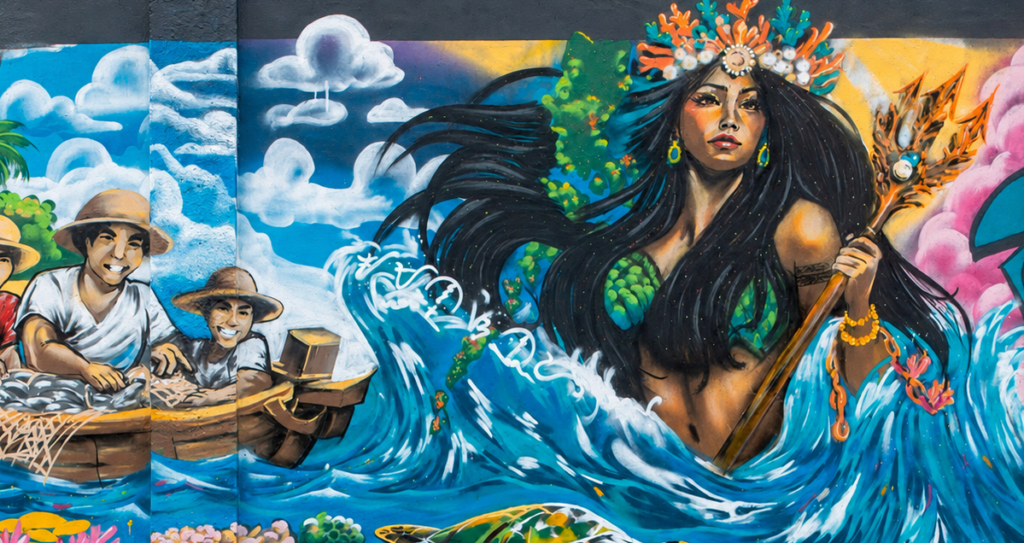
The day’s commemoration also fits into a wider effort to bring the West Philippine Sea issue into public spaces. Earlier this year, the nationwide West Philippine Sea Mural Festival used art to raise awareness about the country’s maritime rights.
In April, the Armed Forces of the Philippines supported a mural painting activity at Camp Aguinaldo High School in Quezon City as part of the festival. In July, the top 100 mural finalists were unveiled during Victory Week, giving the campaign renewed relevance around the anniversary.
The mural festival shows that government statements alone do not shape public memory. Classrooms, walls, paintings and young artists can also turn a legal issue into something people can actually see.
Why Public Commemoration Matters
The arbitral award did not remove Chinese vessels from Philippine waters overnight. It did not end harassment of fishermen. It did not stop Beijing from rejecting international law when the law goes against its claims.
But the ruling gave the Philippines a strong legal foundation. West Philippine Sea Victory Day reminds Filipinos to keep that legal foundation alive.
Horns, monuments and murals may look symbolic. But symbols shape public memory. They tell younger Filipinos that July 12 is not just a date in a legal document. It is a reminder that the Philippines challenged a larger power through law and won.