The Tacloban School Shooting that killed three students at San Jose National High School on Monday, June 22, has raised painful questions about campus safety, bullying, and loose firearms in the Philippines.
What We Know About the Tacloban School Shooting
The attack happened at around 9 a.m. while classes were ongoing at the government-run school in Barangay San Jose. Three students died and at least five others were injure, but the final official injury count may still be updated.
Two suspects, students at the same school aged 14 and 15, were taken into custody. One was caught shortly after the attack, while the other was later found nearby after residents helped authorities.
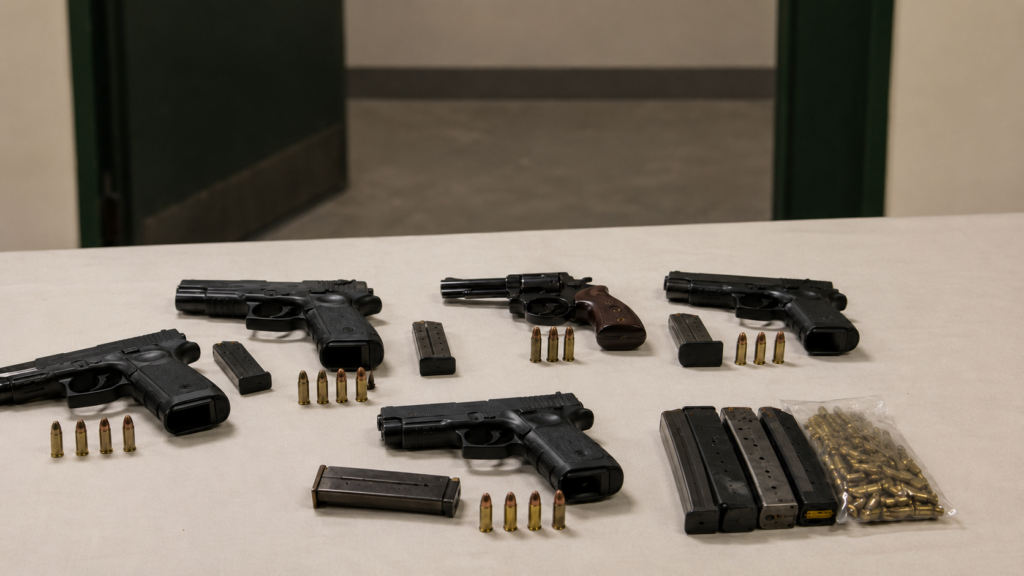
The suspects used a 9 mm pistol and a .38 caliber revolver. Investigators are still looking into how two minors obtained the firearms and brought them inside the school.
Regional police chief Brig. Gen. Jason Capoy said the two boys had no criminal records. During initial questioning, they claimed they had been bullied.
President Ferdinand Marcos Jr. ordered a thorough investigation and directed authorities to strengthen security in schools, offices, and other public places. DepEd also condemned the attack and said it was coordinating with police, social welfare agencies, and school officials to provide assistance and psychosocial support.
The Bigger Problem: Loose Firearms
The Tacloban shooting should not be reduced to one school’s security failure. Yes, reports said there was only one guard on duty despite multiple entrances and exits. That is a serious issue. But the deeper problem is the wider circulation of loose firearms in the Philippines.
PNP figures reported earlier this year show how large the problem remains. From August 2025 to February 19, 2026, authorities arrested more than 5,500 people and accounted for over 15,000 firearms through seizures, confiscations, and surrenders. In 2026 alone, police reported 1,474 arrests and 4,684 firearms accounted for under the firearms regulation law.
Those numbers show active enforcement. They also show that illegal and unregistered weapons remain deeply embedded in society. Firearms still appear in political killings, personal feuds, criminal activity, domestic disputes, and election-related violence. The black market survives through illegal sales, unsecured household weapons, old conflict networks, private security circles, and sometimes corrupt channels.
The question after Tacloban is simple: who put those guns within reach of minors?
That question matters more than any quick debate about gates or bag inspections. A guard can miss a weapon. A metal detector can fail. But a 14-year-old and a 15-year-old should never be able to access pistols in the first place.
Not the First Warning
The Philippines has seen other violent incidents linked to campuses. In 2022, a shooting at Ateneo de Manila University killed former Lamitan mayor Rose Furigay and two others before a graduation ceremony. That case involved an adult suspect and an apparent targeted attack. Still, it showed how even schools and universities can become vulnerable when firearms enter supposedly safe spaces.
The Tacloban case came less than a week after two school stabbing incidents in Cavite, including a June 16 attack in General Trias City that injured seven Grade 5 pupils. These cases are not identical, but they point to the same failure: schools are being forced to handle problems that begin outside the classroom.
Security checks may help, but they are not enough. Schools need mental health support, faster reporting systems for bullying, trained staff, and stronger coordination with parents. But the state also has to confront the illegal gun pipeline more aggressively.