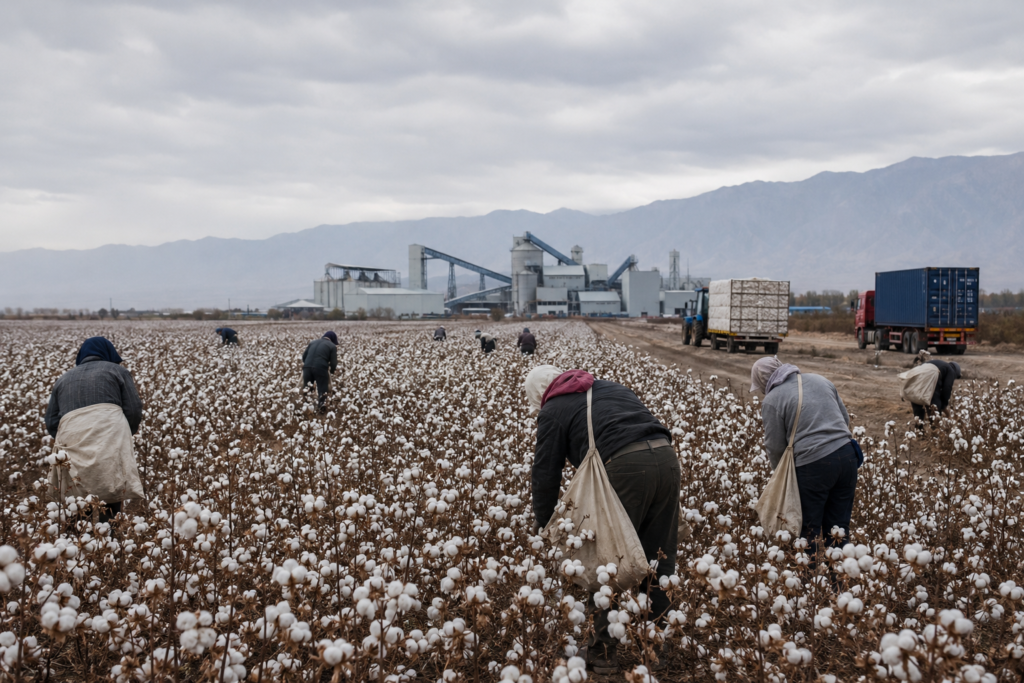
On July 31, 2026, the United States announced the addition of 43 Chinese companies to a blacklist under the Uyghur Forced Labor Prevention Act. The updated list took effect on August 3, marking the largest single expansion since the law became enforceable on June 21, 2022.
The decision renews scrutiny of forced labor in China while raising questions for the Philippines, where inexpensive Chinese imports fill shops and online marketplaces.
The blacklist reaches beyond Xinjiang
Following the latest expansion, the Uyghur Forced Labor Prevention Act blacklist now covers 187 entities. The newly added companies operate in electronics, food processing, metals, batteries, pharmaceuticals, cotton and apparel. Goods linked to them are presumed ineligible for entry into the United States unless importers can prove that forced labor was not involved.
Nineteen of the newly listed companies operate outside Xinjiang. Some allegedly use workers transferred from the region, while others reportedly purchase Xinjiang materials.
Checking where a finished product was assembled does not reveal its full history. Cotton, aluminum or electronic components can pass through several companies before reaching consumers.
Beijing denies using forced labor. It describes its labor-transfer programs as voluntary initiatives that reduce poverty and provide vocational opportunities. However, such claims must be considered within the wider environment facing Uyghurs.
Years of surveillance, arbitrary detention, religious restrictions and pressure on Uyghur identity make genuine consent difficult to establish. Employment does not become voluntary simply because the state calls it development.
Forced-labor concerns also form part of China’s broader treatment of minorities. Tibetans and Mongolians have faced growing pressure on their languages, religious practices and traditional ways of life. China’s ethnic-unity law, which took effect in July, has intensified fears that assimilation will receive an even stronger legal foundation.
The hidden costs of cheap imports
China supplied 31.7 percent of Philippine imports in June 2026, making it the country’s largest foreign supplier. These imports include essential industrial materials, but also enormous quantities of electronics, clothing and other consumer products.
This does not mean every inexpensive product from China involves abuse. A low price alone proves nothing. Nevertheless, opaque supply chains make it difficult for ordinary Filipinos to know who produced an item or under what conditions.
The danger also extends to Filipino businesses. In 2024, Philippine garment shipments were detained in the United States over suspicions that they contained cotton connected to Xinjiang. The episode showed how questionable imported materials can damage otherwise legitimate Philippine exports.
Products made through coercion can also undercut Filipino manufacturers that pay workers voluntarily and follow labor protections. In that situation, the apparent bargain carries costs that never appear on the receipt.
The Philippines must enforce its new rules
In July 2026 the Philippines established procedures to investigate and prohibit imports made wholly or partly through forced labor. The real test will be enforcement, especially when allegations involve indirect suppliers or commercially important Chinese companies.
Consumers with limited incomes should not be blamed for buying affordable goods. Importers, retailers and regulators carry greater responsibility because they have more power to examine supply chains.
Still, when a reliable and reasonably priced Filipino alternative exists, buying local is the better choice. Forced-labor concerns provide another reason, among many, to prefer Filipino products over imports, especially those from China. Choosing local supports Philippine workers and businesses while reducing dependence on supply chains connected to a government repeatedly accused of modern slavery and suppression of minorities.