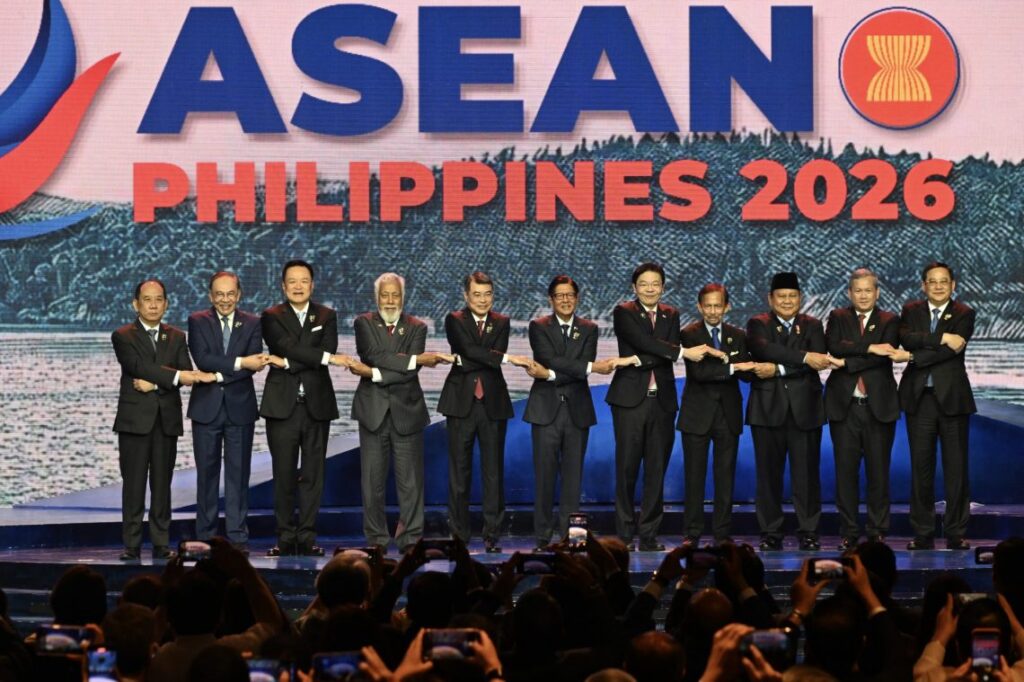
Cebu became the diplomatic center of Southeast Asia as the Philippines hosted the 48th ASEAN Summit on May 8 under its 2026 ASEAN chairship. Although the summit did not deliver dramatic breakthroughs, it placed the Philippines in the chair at a difficult moment and showed how Manila wants to frame this ASEAN year.
Philippines’ ASEAN Chairship Puts Cebu in the Spotlight
The summit was held at the Mactan Expo Center in Lapu-Lapu City, Cebu. Local and national agencies prepared security, transport, media, traffic, and emergency arrangements before the arrival of leaders and delegations.
The setting also gave the Philippines a soft-power opportunity. Cebu has long been linked to trade, travel, and maritime exchange. Hosting ASEAN there allowed Manila to present a major regional gathering outside Metro Manila while also highlighting Cebu’s tourism and business appeal.
The Chair’s Statement showed broad support for the Philippines’ 2026 chairship and its theme. It placed Manila’s priorities around peace and security, economic cooperation, digital transformation, food security, climate resilience, maritime cooperation, and responses to emerging threats.
Another major summit is expected in Metro Manila in November, when dialogue partners such as the United States, China, Japan, and others are likely to give the meetings a heavier geopolitical tone.
What Was Discussed in the 48th ASEAN Summit
The Cebu summit covered a wide agenda because ASEAN is dealing with several pressures at once. The Chair’s Statement reaffirmed ASEAN unity, centrality, sovereignty, peaceful dispute settlement, and support for a rules-based regional order.
ASEAN’s Long-Term Agenda
Leaders also discussed the implementation of “ASEAN 2045: Our Shared Future,” the bloc’s long-term vision for political-security, economic, and socio-cultural cooperation. The statement called for measurable actions, regular review, and progress reporting, which suggests ASEAN wants to make the plan more than another regional slogan.
Economic issues formed a major part of the agenda. The Philippines’ chairship includes 19 Priority Economic Deliverables, covering trade, investment, micro, small, and medium enterprises, digital transformation, artificial intelligence, creative industries, and innovation. These topics matter for Southeast Asia’s competitiveness, especially as technology and supply chains shift.
The summit also addressed cybercrime, illegal drugs, and other transnational threats. These issues have become harder to separate from economic policy and public security. Online scam networks, cyberattacks, drug trafficking, and financial fraud can move across borders faster than governments respond.
Regional Crises and Maritime Cooperation
Myanmar remained one of ASEAN’s hardest problems. President Ferdinand Marcos Jr. said discussions among leaders were “vibrant and emotional.” ASEAN again called for peace, humanitarian access, and dialogue, but the bloc still faces the same problem: it has limited leverage over Myanmar’s military rulers and the conflict continues.
The Thailand-Cambodia border issue also appeared in the summit context. Marcos said the Philippines used its “good offices” as ASEAN chair to help arrange talks between the two sides. That gave Manila a chance to act not only as host, but also as a facilitator for regional dialogue.
Maritime cooperation was another notable topic. The Philippines proposed an ASEAN Maritime Center and offered to host it. Marcos said the center would not target any country, but would support coordination on maritime issues and freedom of navigation. The Chair’s Statement also referred to UNCLOS, maritime cooperation, and continued work toward an effective South China Sea Code of Conduct.
Energy Security and Fuel Sharing
Energy security became one of the summit’s most urgent practical issues. The Middle East crisis and disruption risks around the Strait of Hormuz raised concern across Southeast Asia.
ASEAN leaders pushed for faster ratification of a regional fuel-sharing framework. The idea is to create a system that could help members support one another during a serious supply disruption. However, the summit did not produce a detailed emergency response plan. Key questions remain, including how to allocate fuel, how payments would work, and what happens if several countries need assistance at the same time.
The summit also discussed wider energy measures, including diversification of suppliers and routes, regional reserves, power-grid connectivity, electric vehicles, and possible civilian nuclear energy.