The debate over the West Philippine Sea has crossed a critical line. What once appeared to be technical disagreements over maritime zones now points to a deeper concern: Chinese influence in Philippine politics and its effect on how national sovereignty is discussed. When public officials repeat arguments that favor Beijing’s position, the issue ceases to be academic and becomes a matter of responsibility and judgment.
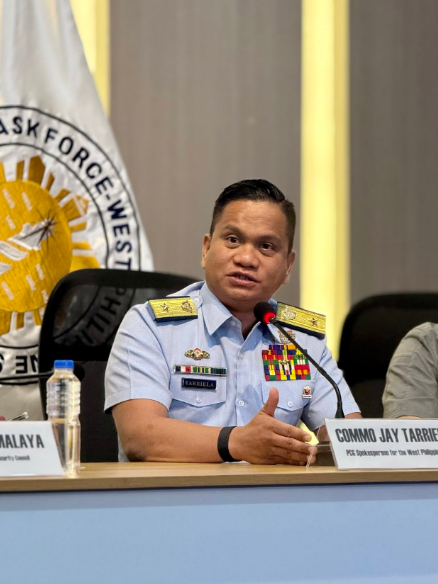
Philippine Coast Guard spokesperson Jay Tarriela captured this shift when he warned that defending China’s claims while undermining the Philippines’ legal position is not patriotic service. “If you are advancing their interests and questioning our own position, this is actually treasonous,” Tarriela said. The remark was blunt, but it reflected the stakes involved rather than rhetorical excess.
A Debate Already Settled by Law
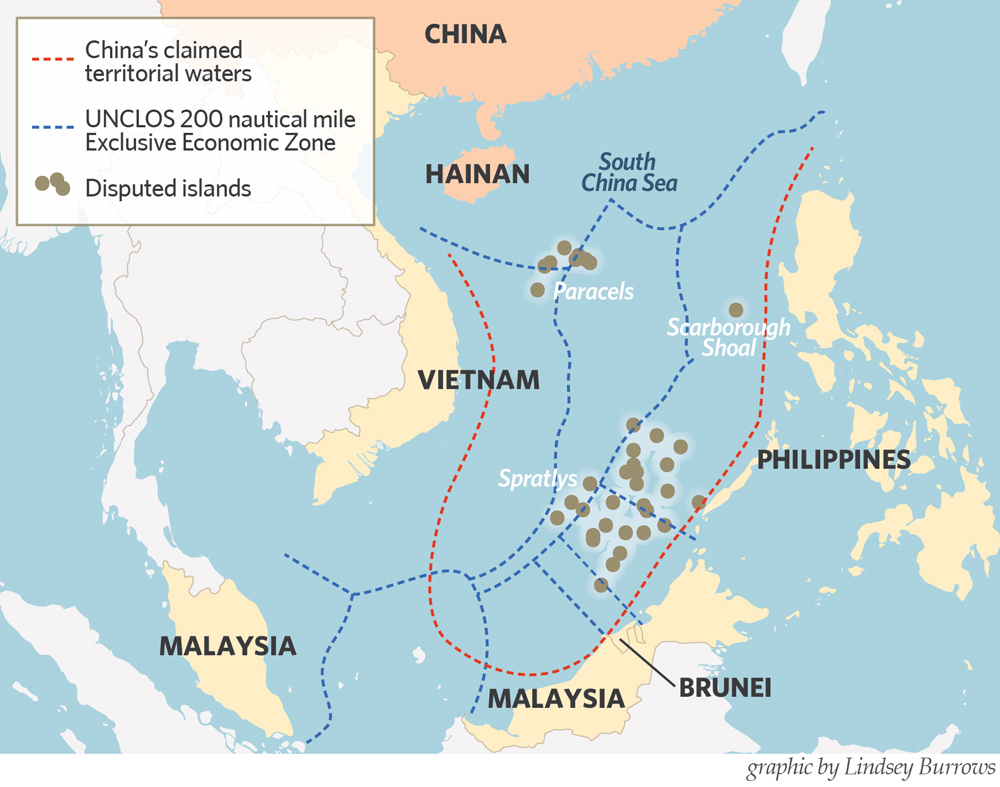
The Philippines’ legal position in the West Philippine Sea is well established. The 2016 arbitral ruling invalidated China’s nine-dash line claims, and Philippine maritime entitlements are defined in domestic law. Reopening questions about sovereignty or coordinates does not clarify policy. It weakens it.
This became evident during a Commission on Appointments hearing when Sen. Rodante Marcoleta suggested that the Philippines consider giving up the Kalayaan Island Group, arguing that it lies outside the country’s exclusive economic zone under UNCLOS. Although he later said his remarks were taken out of context, legal experts and maritime law specialists warned that such framing misrepresents the law.
While some features lie beyond the EEZ, inhabited islands generate territorial seas and fall under Philippine sovereignty. Blurring this distinction creates confusion where none exists and undermines the country’s standing.
Chinese Influence in Philippine Politics as Narrative Pressure
Tarriela’s warning resonates because public discourse shapes strategic outcomes. When officials echo arguments long used by Beijing, they lend credibility to narratives meant to normalize retreat and portray Philippine assertions as unreasonable.
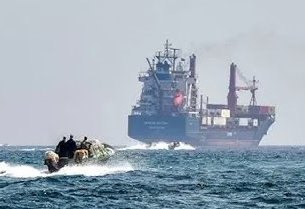
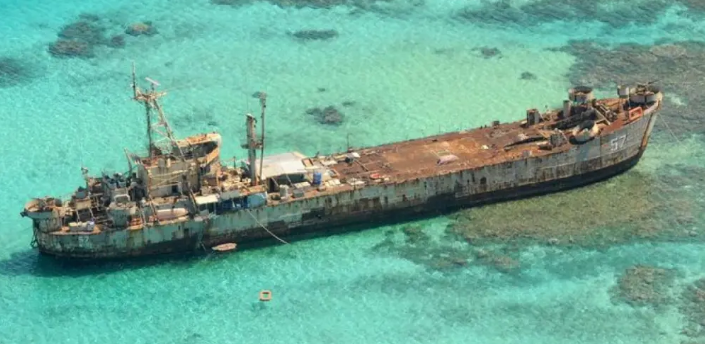
China’s approach relies less on decisive action and more on sustained narrative pressure. Legal ambiguity, repeated often enough, becomes perceived uncertainty. Internal disagreement becomes evidence of weakness. This is why the Philippine Coast Guard’s transparency initiative matters. By releasing unedited photos and videos of water cannon attacks, dangerous maneuvers, ramming incidents, and maritime militia deployments, the government prevents Beijing from controlling the narrative.
Transparency does not escalate tensions. Silence does. Without evidence in the public record, disinformation fills the gap. Similar dynamics are visible online, where Chinese-funded social-media propaganda seeks to exhaust public resolve through repetition rather than persuasion.
Loyalty, Dissent, and Responsibility in Public Office
Debate over tactics and diplomacy is legitimate. Undermining settled legal rights while holding public office is not. Freedom of expression does not erase the consequences of advancing a foreign power’s strategic narrative.
This context explains why lawmakers are pushing to modernize anti-espionage laws. Existing statutes were written for declared wars, not for prolonged gray-zone pressure conducted during peacetime. Today’s threats depend on influence, recruitment, and narrative capture rather than force alone.
The Philippines can argue about how best to defend its interests in the West Philippine Sea. It cannot argue away those interests altogether. Neutrality ends where sovereignty begins. In the current environment, advancing a foreign power’s narrative is not harmless speech. It carries real consequences, and public officials should be judged accordingly.