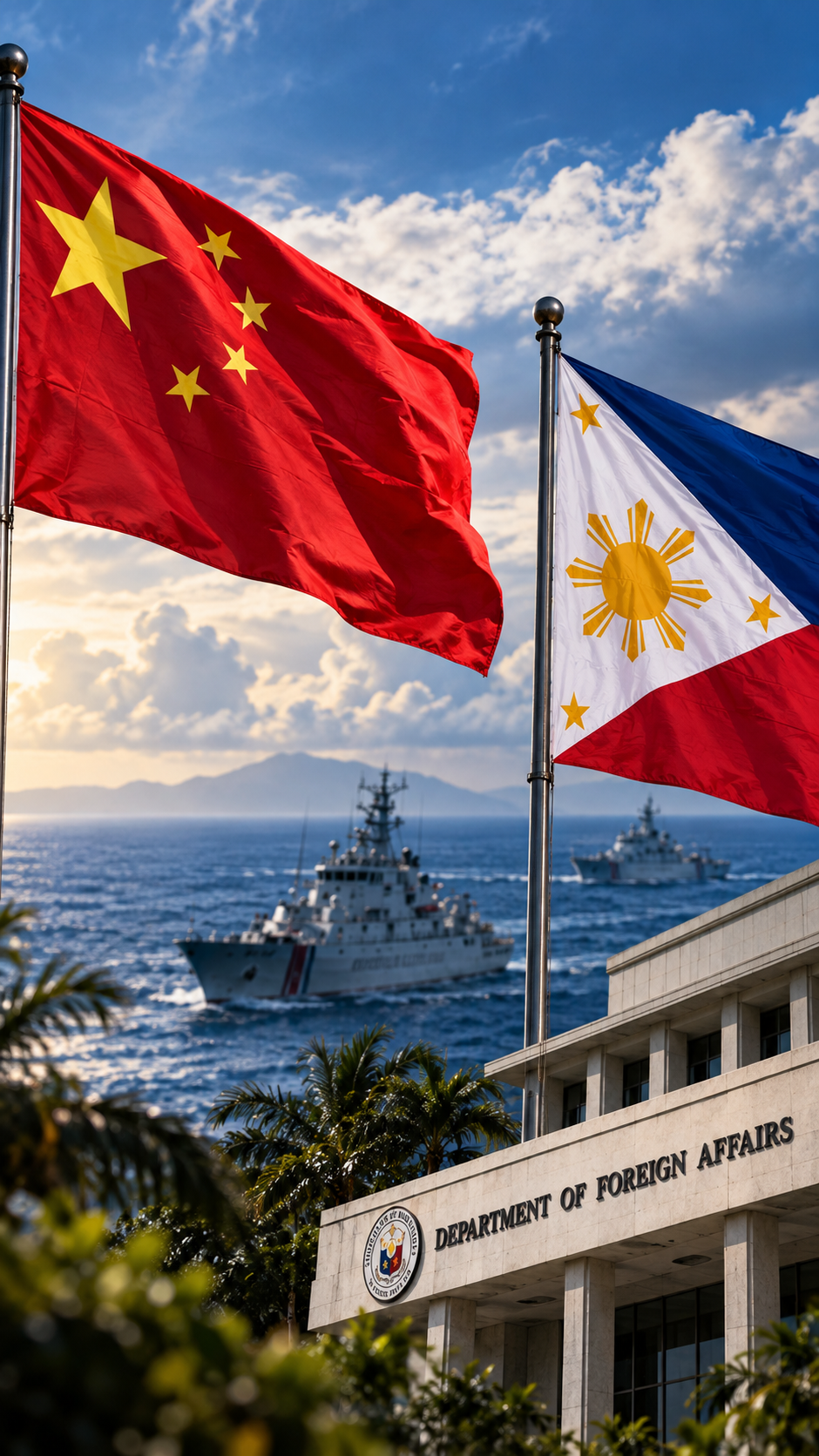

Amid rising friction in the West Philippine Sea and growing concern over Taiwan, this year’s Balikatan military drills looked less like a routine exercise and more like a strategic warning. Involving more than 17,000 troops from the Philippines, the United States and allied partners, Balikatan 2026 became the largest and most complex version yet, while China answered with criticism, pressure and live-fire drills near Luzon.
A New Level of Allied Readiness
The Balikatan military drills, running from April 20 to May 8, brought in not only U.S. and Philippine forces but also Australia, Canada, France and New Zealand, while Japan joined live-fire components for the first time.
Japanese forces are set to use the Type 88 anti-ship missile in a maritime strike exercise to help sink a decommissioned vessel, a notable step as tensions between Tokyo and Beijing persist in both the East China Sea and around Taiwan. It signals defense ties between Manila and Tokyo are moving from diplomacy into operational cooperation.
Philippine and U.S. forces launched maritime strike drills on Itbayat, the country’s northernmost island, about 155 kilometers from Taiwan. In Zambales, allied troops conducted counter-landing live-fire drills facing the South China Sea, not far from Scarborough Shoal. The Philippines also showcased its BrahMos missile capability.
Critics call such exercises provocative. That gets the sequence backwards. After repeated confrontations at sea, dangerous maneuvers, pressure on Philippine resupply missions, disputes over China’s nine-dash line claims, and broader concerns linked to illegal fishing and joint exploration proposals, stronger readiness is a response to coercion, not its cause.
China’s Response to Balikatan Military Drills
As Balikatan began, Chinese officials warned against “division and confrontation,” criticizing the growing network of allied cooperation. Then came a more unusual signal: commentary in the People’s Daily suggested Manila could not expect Chinese economic relief while deepening military alignment with Washington.
The message centered partly on energy and supply security. China has cut some fuel exports in the region amid wider disruptions, while also highlighting fertilizer and possible fuel cooperation with the Philippines. The implication was a warning that economic cooperation and emergency assistance could carry political conditions.
On April 24, China announced live-fire drills east of Luzon involving sea-air coordination, rapid maneuvers and joint combat testing. Beijing called them a “necessary operation” under current regional conditions.
Taken together, diplomatic warnings, energy pressure and military drills near Philippine waters looked less like routine responses than layered intimidation.
And they arguably reinforced the rationale for Balikatan.
The South China Sea, Taiwan and the Struggle Over Sovereignty
China’s sweeping claims in the South China Sea were rejected in the 2016 arbitral ruling under United Nations Convention on the Law of the Sea, yet Beijing continues to ignore the Philippines’ exclusive economic zone. That dispute is about sovereignty, but also about whether rules constrain power.
Taiwan raises a related question.
The Itbayat drills made clear Philippine planners recognize instability in the Taiwan Strait could directly affect Philippine security. Yet beyond strategy lies principle: Taiwan’s future should be decided by its people, not imposed through force.
There is a parallel here. Just as Beijing dismisses maritime rulings it dislikes, it treats Taiwan’s political future as already settled. In both cases, power is often asserted ahead of law.