Philippine politics rarely lacks drama, but this week moved from ordinary partisan conflict into something more serious: an ICC warrant, a Senate lockdown, gunfire inside one of the country’s highest institutions, Rodrigo Duterte’s coming trial in The Hague, and Sara Duterte’s impeachment trial all unfolding almost at once.
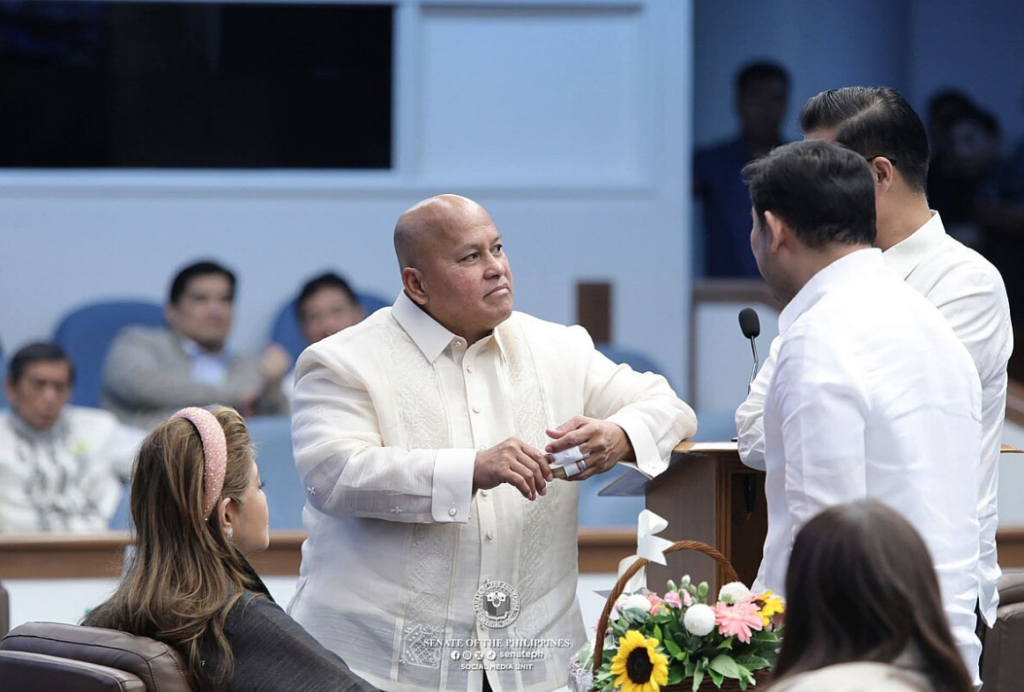
At the center of the immediate crisis is Senator Ronald “Bato” dela Rosa, the former Philippine National Police chief who served as one of the main faces of Duterte’s bloody drug war. The International Criminal Court has issued an arrest warrant against him for alleged crimes against humanity linked to that campaign. Dela Rosa denies wrongdoing and argues that the ICC no longer has jurisdiction because the Philippines withdrew from the court in 2019.
Dela Rosa, the ICC Warrant, and the Senate Lockdown
The confrontation escalated after Dela Rosa returned to the Senate and took refuge there while facing possible arrest. Reports described a chaotic scene, including a Senate lockdown, security deployments, supporters outside the building, and a dramatic attempt by authorities to move against him.
Then came the gunfire.
Shots were heard at the Philippine Senate on May 13 during the standoff. No injuries were reported, but the symbolism was hard to miss. A sitting senator wanted by the ICC was inside the Senate, the chamber was under extraordinary security pressure, and the country was watching another Duterte-linked crisis spill into national institutions.
President Ferdinand Marcos Jr. denied ordering Dela Rosa’s arrest and called for calm. Authorities also began checking reports that Dela Rosa may have left the Senate premises after the chaos. As of the latest reports, the full sequence of events remains under investigation.
Dela Rosa has also gone to the Supreme Court to challenge any move that would transfer him to The Hague. That places the case at the intersection of international law, domestic politics, and institutional authority.
Duterte’s Case Has Already Moved Further
The bigger backdrop is Rodrigo Duterte’s own ICC case. On April 23, 2026, the ICC confirmed all charges against the former president and committed him to trial. The charges involve murder and attempted murder as crimes against humanity, linked to alleged killings during the drug war.
Duterte has denied criminal responsibility. His allies continue to frame the ICC process as political persecution. But the court’s decision marked a major shift: the case is no longer only an investigation or diplomatic dispute. It is moving toward trial.
Dela Rosa’s case is not separate from Duterte’s legacy. He was not a minor figure in the drug war. As police chief, he became one of its most visible enforcers. His current standoff is therefore not just about one senator trying to avoid arrest. It is about whether the machinery of the Duterte years can now be examined in court.
The question is no longer only whether voters still support the Dutertes. The question is whether institutions can handle the legal consequences of that period without being dragged into disorder.
Sara Duterte’s Impeachment Adds the Next Shock
The week’s other major development is Vice President Sara Duterte’s impeachment. Philippine lawmakers voted to impeach her on May 11, sending the case to the Senate. She faces allegations involving misuse of public funds, unexplained wealth, and threats against President Marcos, First Lady Liza Araneta Marcos, and former House Speaker Martin Romualdez. She denies the accusations.
The Senate is expected to convene as an impeachment court on May 18.
That timing is remarkable. The same chamber shaken by the Dela Rosa standoff is now preparing to judge the vice president. And that vice president is not just any politician. She is Rodrigo Duterte’s daughter, a likely 2028 presidential contender, and the most powerful remaining figure in the Duterte political camp.