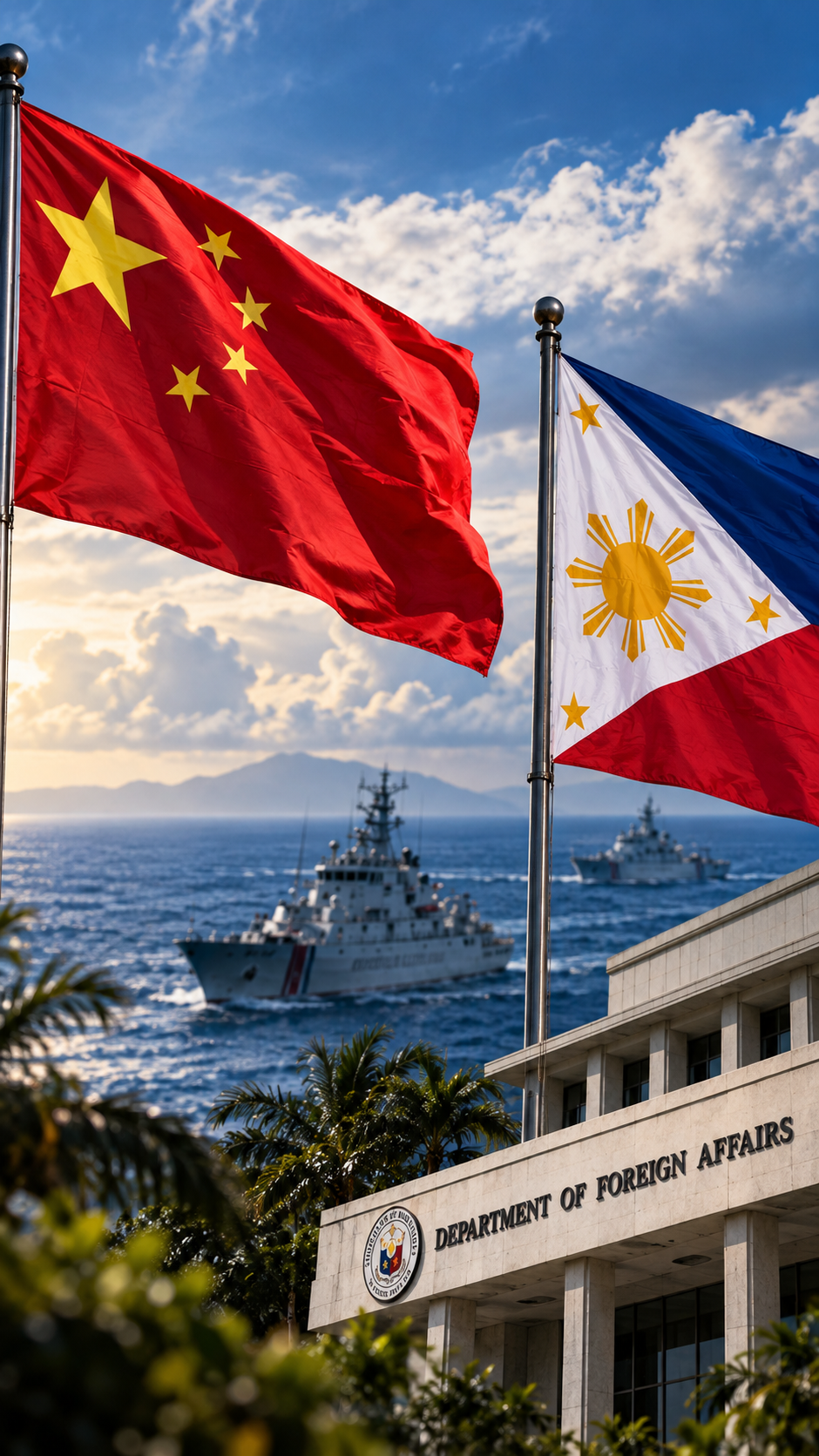
The ASEAN Maritime Center proposal was already part of the maritime agenda at the 48th ASEAN Summit in Cebu, but recent incidents near the Philippines and Taiwan show why the idea now feels more urgent.
On May 6, the Philippine Coast Guard accused China of conducting unauthorized marine scientific research near the Reed Bank area in the West Philippine Sea. The following day, Taiwan said it had driven away a Chinese research ship after suspected survey activity near the island. The cases are different in legal and political terms, but both point to the same concern: Chinese vessels are increasingly appearing in contested waters.
ASEAN Maritime Center Moves Into Focus
At the Cebu summit, ASEAN leaders adopted a declaration on maritime cooperation and agreed to establish an ASEAN Maritime Center based in the Philippines. President Ferdinand Marcos Jr. said the center’s structure, funding, and technical details still need work, but its broad mission is clear: support maritime safety, freedom of navigation, and order in the South China Sea.
Marcos described the ASEAN Maritime Center as a way to bring together existing efforts by ASEAN members and interested partners. Its possible work includes maritime coordination, illegal fishing, smuggling, and safer passage through one of the world’s busiest waterways.
Manila has spent years responding to Chinese coast guard, militia, and research activity in waters where it has sovereign rights under international law. A regional center will not physically block Chinese vessels. But it could improve maritime awareness, incident tracking, information-sharing, and diplomatic coordination.
The proposal also comes as ASEAN continues to negotiate a South China Sea Code of Conduct with China. Marcos said the Philippines, as ASEAN chair, still aims to complete that code before the end of the year. He also acknowledged the difficulty, since ASEAN members do not all approach Beijing in the same way.
Reed Bank Shows Why “Research” Is Politically Sensitive
The latest Philippine incident involved the Chinese research vessel Xiang Yang Hong 33. The Philippine Coast Guard said a patrol aircraft spotted it near Iroquois Reef on May 6, where it was seen deploying a service boat toward the reef. Manila said this confirmed unauthorized research operations.
The PCG also observed one Chinese Coast Guard vessel and 13 Chinese maritime militia ships nearby. It said the same research vessel had operated in recent weeks near Second Thomas Shoal, Sabina Shoal, Mischief Reef, and Jackson Atoll.
China rejected the accusation. The China Coast Guard said the Philippine aircraft had harassed the vessel and described the activity as a legitimate marine ecological survey. Beijing’s embassy in Manila said Chinese research ships were conducting normal scientific work in waters it considers under Chinese jurisdiction.
That dispute shows why “research” is politically sensitive in contested waters. Such vessels can collect seabed, oceanographic, and environmental data useful for resource exploration, naval planning, infrastructure, or future legal claims.
For the Philippines, Reed Bank matters because of its potential oil and gas resources, especially as Malampaya declines and imported energy costs rise. But unauthorized Chinese operations near the area also sharpen the debate over joint exploration or joint research with China. Any such arrangement would raise a strategic concern: whether cooperation could gradually normalize Beijing’s presence in waters where the Philippines holds sovereign rights.
Taiwan Incident Points to a Wider Pattern
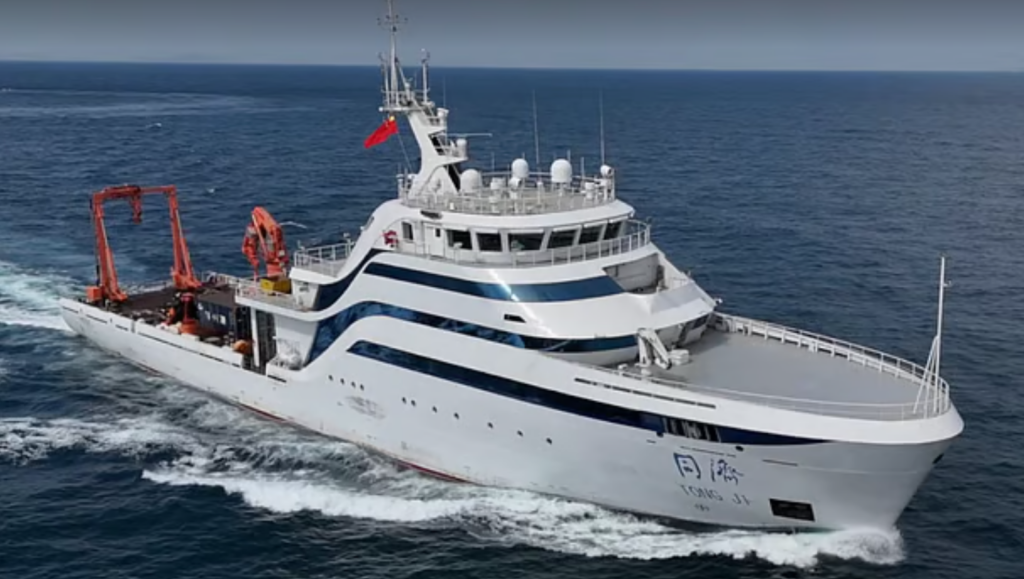
On May 7 Taiwan’s coast guard detected the Chinese research ship Tongji about 29 nautical miles southeast of Taiwan’s southern tip. The vessel appeared to be lowering ropes into the water, which Taiwanese authorities suspected was linked to survey instruments.
Taiwan sent a coast guard ship, used wake interference, and broadcast warnings to stop the activity. The Chinese ship retrieved its equipment, changed course, and left the area. Taiwan said it continued shadowing the vessel until it moved away from waters near the island.
The Tongji is a modern research vessel. Chinese state media have described it as having laboratories, remotely operated vehicles, unmanned systems, and capabilities linked to marine geology, oceanography, chemistry, biology, and offshore engineering.
The Taiwan case is not the same as the Philippine case. Taiwan’s status, waters, and security environment are distinct. But both incidents fit a broader pattern of Chinese grey-zone activity, where civilian or quasi-civilian vessels operate below the threshold of open conflict while still applying pressure.