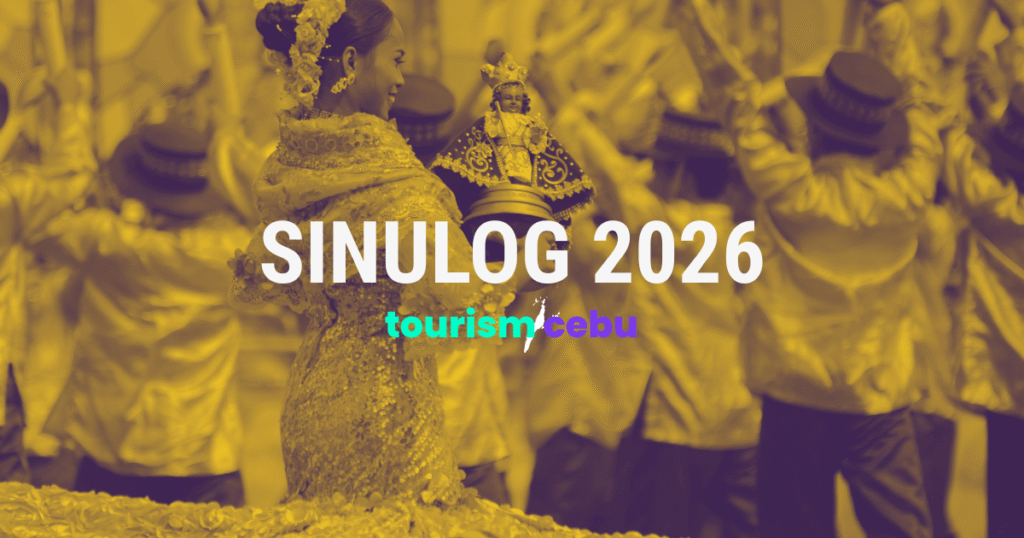
This year’s celebration is shaping up to be one of the largest in recent memory. Cebu City officials estimate that four to five million people will arrive for the festival, with January 18 marking the 461st feast day of the Santo Niño. Local and foreign visitors are expected to join residents for street events, church activities, and the grand parade.
City authorities have placed strong emphasis on safety. Around 7,000 personnel from police, military, and emergency services are deployed across Cebu City. A mobile command center now provides real-time CCTV coverage in key areas of Metro Cebu. The stated aim is to keep the celebration peaceful without draining its energy.
Sinulog 2026: When Faith Leaves the Church and Enters the Streets
Sinulog traces its roots to Cebu’s earliest encounters with Christianity in the 16th century, when the image of the Santo Niño was presented as a gift to Rajah Humabon and Queen Juana. Over time, devotion to the Child Jesus took on a distinctly Filipino character. The Santo Niño came to be seen not as a distant symbol of authority, but as a companion… protective, forgiving, and present in everyday hardship.
The festival’s defining movement, the forward-and-back sinulog step, reflects this history. It mirrors the flow of water and the rhythm of life, symbolizing both struggle and continuity. Dancers raise their images of the Santo Niño not as decoration, but as offerings. The repeated chant of “Pit Señor” is not performance language. It is petition, gratitude, and plea rolled into one.
Like the Traslacion, Sinulog carries an unspoken understanding of humility. Many devotees attend novena masses and processions without footwear, especially near the Basilica Minore del Santo Niño. Walking barefoot is not required, yet it remains common. For believers, removing shoes is a way of approaching the Santo Niño without status or protection. Discomfort becomes part of devotion, not a distraction from it.
Dance, belief, and belonging
Festivities began with Sinulog sa Dakbayan, featuring barangay-based contingents whose performances serve as both competition and communal offering. These early events allow local groups to present their own interpretations of devotion, shaped by neighborhood history, shared vows, and collective memory.
The strongest contingents advance to the Sinulog Mardi Gras, where more than 40 groups are expected to compete in the main event. Performances combine tightly rehearsed choreography with ritual gestures and chants of “Pit Señor,” blending spectacle with prayer.