A short social-media post from the Chinese embassy in Manila recently revived an obscure diplomatic document from the 1990s. The embassy circulated a reference to a letter written in 1990 by former Philippine ambassador Bienvenido Tan Jr., suggesting that Philippine authorities at the time did not consider Scarborough Shoal part of national territory. The implication was clear: if Manila once took that view, today’s dispute over the shoal becomes less straightforward.
The document itself is not new. What is new is the way it is being used. By bringing the letter back into the conversation, Beijing effectively tries to strengthen China’s claims with a historical fragment that most people had never heard of until now.
Diplomatic messaging and narrative
The episode illustrates how the West Philippine Sea dispute increasingly unfolds through narratives and interpretation, not only through ships and patrols.
Reviving a thirty-year-old diplomatic communication is a clever move in that sense. A single line from a past letter can be presented as evidence that even Philippine officials once acknowledged limits to their sovereignty. Whether that interpretation holds up under closer scrutiny is another matter entirely.
Manila quickly rejected the embassy’s framing. Philippine officials emphasized that maritime disputes should be assessed through international law rather than selective historical quotations. In other words, a diplomatic letter from decades ago does not determine the legal status of a maritime feature in the present.
The logic behind China’s claims
The strategy follows a familiar pattern. Beijing’s arguments tend to rely heavily on historical references: old maps, traditional fishing routes, ancient names for reefs and shoals. These materials are then presented as proof that Chinese presence in the region predates modern maritime boundaries.
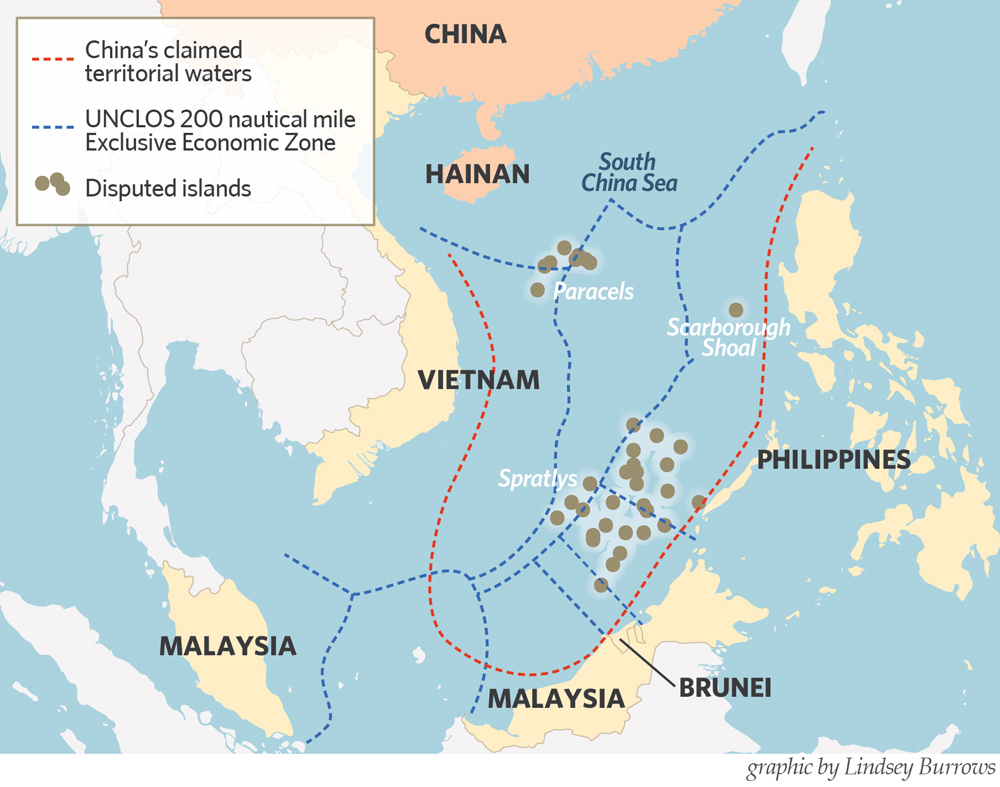
At the same time, China rejects the 2016 arbitration ruling issued under the United Nations Convention on the Law of the Sea. That decision concluded that the sweeping maritime assertions associated with the “nine-dash line” have no legal basis.
The contrast is striking. Modern maritime law places clear limits on coastal states’ rights and exclusive economic zones. Historical anecdotes, on the other hand, are far more flexible. They can be interpreted, emphasized, or rediscovered depending on the political moment.
That is why old documents continue to appear in the debate. By highlighting fragments of historical correspondence or cartography, Beijing keeps reinforcing China’s claims while shifting the discussion away from the legal framework that governs today’s oceans.