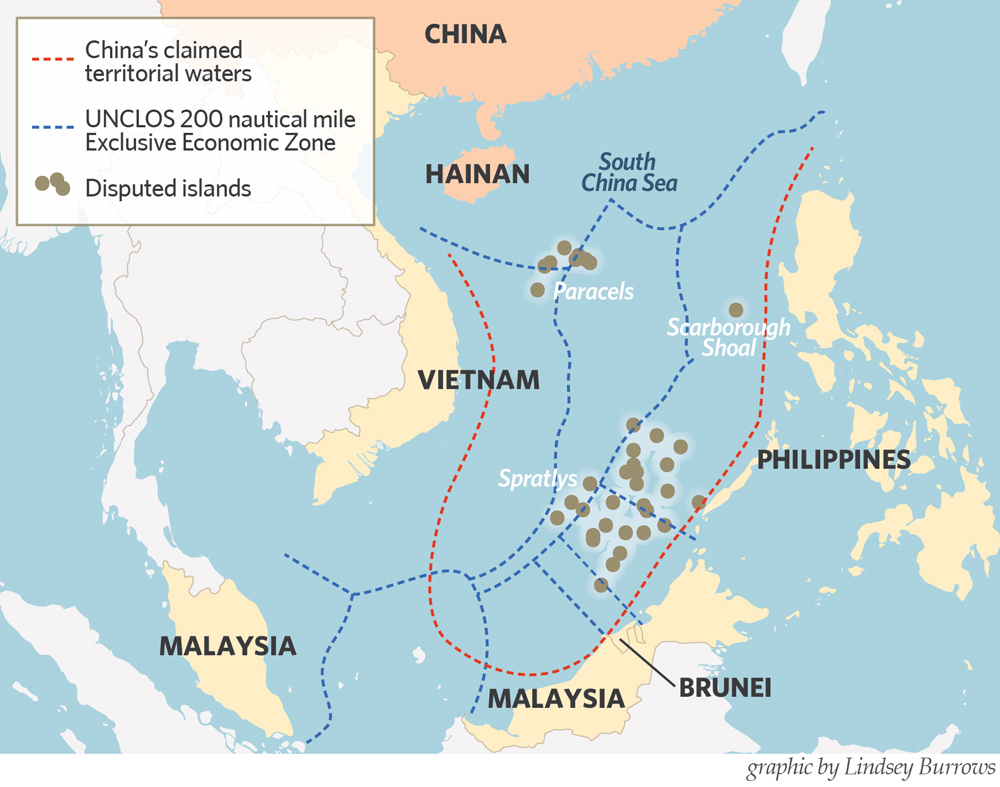

Philippine investigators are examining how sensitive information about resupply missions in the West Philippine Sea ended up in the hands of Chinese intelligence.
Philippine security agencies recently arrested at least three Filipino nationals suspected of passing operational information to Chinese intelligence. Investigators say the group transmitted details connected to resupply missions to remote outposts in the West Philippine Sea.
The suspects told investigators the contact began with small paid tasks, including writing assignments and basic research. Over time, the requests shifted toward obtaining information linked to maritime operations.
Authorities say the group shared logistical details, personnel movements, and schedules connected to resupply activities. Some communication with handlers allegedly took place through encrypted messaging systems hidden inside a mobile phone game.
The leak has triggered a wider investigation into how operational information moved outside official channels and whether more individuals were involved.
The Importance of Resupply Missions in the West Philippine Sea
Resupply missions are essential for maintaining the Philippines’ presence in disputed areas of the West Philippine Sea. These operations deliver food, water, fuel, and rotating personnel to small outposts, including the Philippine detachment stationed aboard the grounded BRP Sierra Madre at Second Thomas Shoal.
The aging ship, intentionally grounded in 1999, serves as a marker of Manila’s claim in the area. Without regular supply trips, the soldiers stationed there would struggle to remain in place.
China has repeatedly tried to disrupt these missions. Chinese coast guard and maritime militia vessels have blocked Philippine boats, used powerful water cannons, and carried out risky maneuvers at sea.
Observers often describe these actions as “gray zone” tactics: pressure applied below the level of open conflict.
Other Espionage and Cybersecurity Incidents
The case is not the first time Philippine authorities have uncovered suspected foreign intelligence activity.
In early 2025 authorities uncovered a suspected Chinese spy network accused of monitoring military installations, ports, and infrastructure facilities across the country. Investigators said the group collected information on more than a hundred locations considered strategically sensitive.
Large cybercrime compounds uncovered in the Philippines have also drawn attention from security agencies. Several raids exposed hubs employing hundreds of workers involved in online scams and digital operations. Security officials warn such networks can also be used to gather data or support intelligence activities.
China has also been coordinating online campaigns attempting to influence public debate about the West Philippine Sea and the Philippines’ alliance with the United States.
Debate Over Espionage Laws in the Philippines
The case has revived debate about whether Philippine espionage laws are equipped to deal with modern intelligence operations.
Many of the country’s legal provisions were written decades ago, long before encrypted messaging, cyber networks, and digital surveillance became common tools in intelligence work.
Some lawmakers are now discussing possible updates to address cyber-enabled spying, online recruitment, and foreign influence operations.