Talks on a regional code of conduct for the South China Sea are again being framed as “moving forward” in 2026, but the gap between diplomatic language and conditions on the water is becoming harder to ignore, especially in the West Philippine Sea.
As ASEAN chair this year, the Philippines has pushed for more meetings and faster timelines. Officials say all parties want to conclude negotiations within 2026. On paper, that sounds like progress. In practice, the most basic questions remain unanswered, including what the agreement would actually cover and whether it would bind anyone to anything at all.
Why the Code of Conduct Is Still Stuck
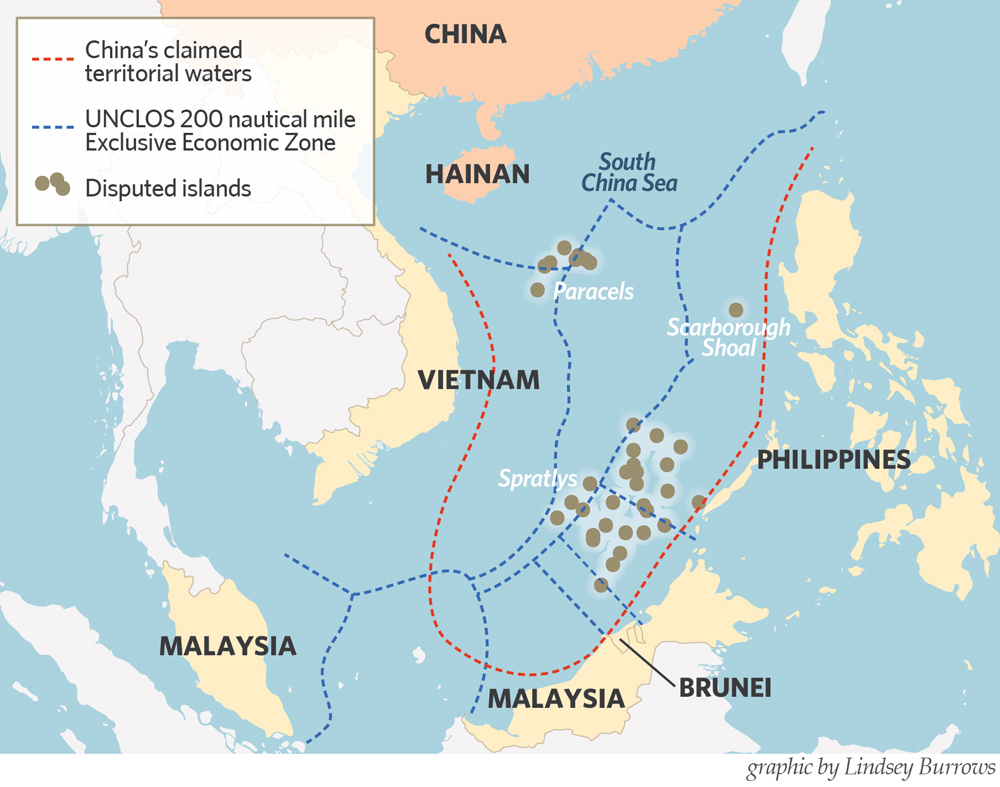
After years of discussions, there is still no agreed draft for the code of conduct. That alone explains much of the skepticism among analysts. Disputes over geographic scope continue to divide claimants. Some want the Paracel Islands included, while the Philippines has consistently focused on the Spratly area, where its own maritime interests lie.
More problematic is the issue of enforcement. China has pushed for a non-binding, voluntary framework. For smaller states facing repeated maritime pressure, that raises an obvious question: what changes if violations carry no consequences? An agreement without legal force risks becoming another political document that manages optics rather than behavior.
There is also the unresolved question of law. Beijing has made clear it does not want the agreement tied to the 2016 arbitral ruling or explicitly grounded in the UN Convention on the Law of the Sea. For Manila, that reluctance undercuts the credibility of any regional mechanism meant to stabilize disputed waters.
Drills at Sea, Not Calm, Define the Moment
While negotiators talk, events in the West Philippine Sea continue to shape perceptions. This week’s joint maritime drill between the Philippines and the United States near Scarborough Shoal was not a symbolic exercise. It was the eleventh such activity since late 2023 and involved naval vessels, aircraft, and coast guard units.
China responded by accusing Manila of inviting outside powers to destabilize the region. Yet from the Philippine perspective, these drills reflect a pattern of incidents that includes water-cannon use, close-range maneuvering, and interference with resupply missions inside its exclusive economic zone.
This is where the contradiction becomes clear. China has argued that military exercises should be discussed within the code of conduct framework. ASEAN states, including the Philippines, have rejected that idea outright. Allowing external security cooperation to be constrained by a negotiation that has yet to produce a draft would effectively give Beijing leverage it does not have under international law.