
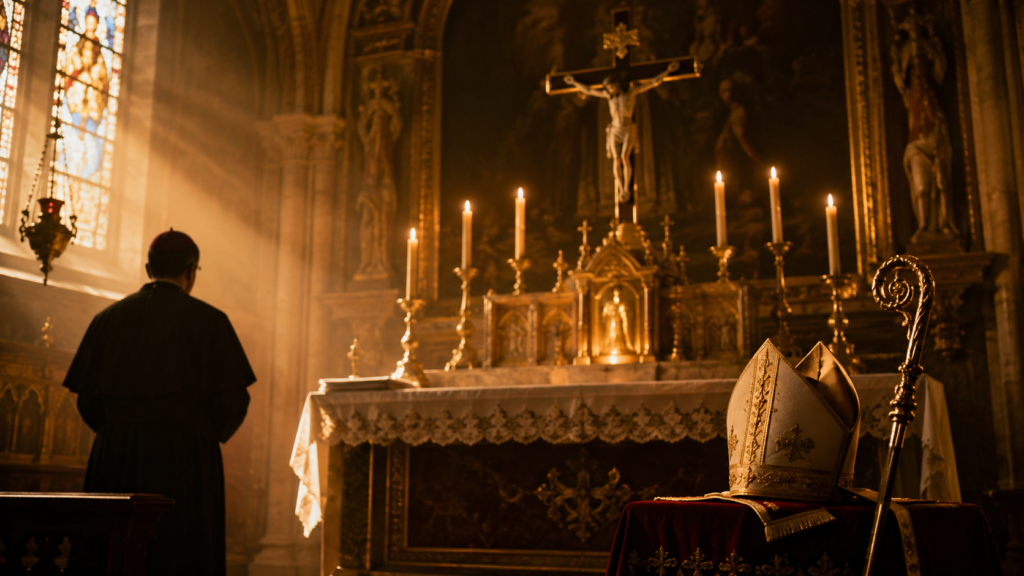
The SSPX Excommunication has brought renewed attention to one of the Catholic Church’s longest-running disputes with traditionalist Catholics.
For Filipino Catholics the issue raises practical questions about worship, sacraments and communion with the pope.
Who Are the Society of St. Pius X?
The Society of St. Pius X, often called SSPX, is a traditionalist Catholic group founded in 1970 by French Archbishop Marcel Lefebvre.
The group is best known for its attachment to the Traditional Latin Mass, the older form of the Roman rite used before the liturgical reforms that followed the Second Vatican Council. Many Catholics who are drawn to this form of worship value its silence, solemnity, Latin prayers and older rituals.
But the SSPX dispute with Rome has never been only about language or liturgical style. The group has long resisted parts of Vatican II, including reforms linked to religious liberty, ecumenism and dialogue with other faiths.
In 1988, Lefebvre consecrated bishops without papal approval. Those consecrations triggered automatic excommunications and created a deep rupture with Rome. Since then, Vatican officials have made several efforts to bring the SSPX back into full communion, but the dispute has remained unresolved.
The SSPX Excommunication by the Vatican
The latest break came after the SSPX consecrated four new bishops in Écône, Switzerland, on July 1, 2026, without a papal mandate.
The Vatican said the ordinations went ahead despite the will of Pope Leo XIV. A decree from the Dicastery for the Doctrine of the Faith described the consecrations as an act of schism and said the bishops involved had incurred automatic excommunication.
For Catholics, this is not a minor procedural issue. A bishop is not just a local religious leader. Bishops are part of the Church’s apostolic structure, and their consecration requires communion with the pope.
That is why Rome treats unauthorized episcopal consecrations so seriously. The issue is not whether Catholics may love old prayers, traditional music or the beauty of older liturgy. The issue is whether a group can act against the pope’s direct authority while still claiming full unity with the Catholic Church.
The Vatican also warned that SSPX ministers administer sacraments illicitly, while confessions heard and marriages witnessed by SSPX clergy are considered invalid. It urged Catholics to remain in communion with the pope and bishops united with him.
The SSPX Appeal
On July 11, the group submitted a preliminary recourse to the Dicastery for the Doctrine of the Faith. It argued that the appeal suspended the execution of the Vatican decree.
Canon-law experts have questioned how much that argument can change. The reason is straightforward: automatic excommunication does not begin only when Rome publishes a document. It is tied to the act itself. If bishops are consecrated without papal approval, the canonical consequence follows from that action.
The SSPX may still pursue a formal appeal process. But the appeal does not erase the central problem. Rome says the group crossed a line by consecrating bishops against the pope’s will.
Cubao Offers Guidance for Filipino Catholics
In the Philippines, the Diocese of Cubao has already responded to the SSPX Excommunication with a pastoral letter from Bishop Elias Ayuban Jr.
Ayuban said the diocese would organize a group of priests and lay faithful to provide information, counseling and pastoral assistance for Catholics affected by the dispute. His message was firm, but it was also pastoral. He stressed that many lay Catholics connected to SSPX communities may have sincerely loved the sacred liturgy and Catholic tradition.
The bishop also clarified that lay followers of the SSPX do not automatically share the same irregular status as the group’s ministers. But he urged them to stop taking part in SSPX liturgies, warning that continued participation could expose them to illicit or invalid sacraments and even the danger of excommunication.
At the same time, Cubao made an important distinction. The Traditional Latin Mass itself is not the enemy. Ayuban said the Mass of the 1962 Roman Missal would continue in the Diocese of Cubao under Church rules. The diocese would also explore additional Traditional Latin Masses for more devotees, in line with Traditionis Custodes.