
For decades, UFO sightings were dismissed as science fiction, conspiracy theories, or simple misinterpretations. That perception is now changing.
Across the world, reports of unidentified flying objects (UFOs) or unidentified anomalous phenomena (UAPs) in the sky continue to surface. Not all come from anonymous sources or shaky videos: some have been observed by trained pilots, tracked on radar systems, and recorded by advanced sensors.
Governments no longer ignore or discredit this phenomenon. What was once taboo is now openly discussed in official reports, congressional hearings, and military briefings.
Most sightings are eventually explained as natural or human-made phenomena, ranging from atmospheric effects to aircraft and space debris. However, some credible and documented encounters remain unexplained.
It is also important to note that “unidentified” does not necessarily mean “extraterrestrial”: not everything we cannot explain is evidence of alien visitors.
Trump’s statements and a global shift
Donald Trump recently announced that his administration has uncovered “interesting” documents related to UFOs and would begin releasing them. The directive followed earlier moves to declassify government records and respond to growing public interest.
This is part of a broader shift in the United States. The Pentagon has spent years reviewing hundreds of cases under formal programs, concluding that while some incidents remain unresolved, there is no confirmed evidence of extraterrestrial technology. The focus has instead turned to a more practical concern: unidentified objects in restricted airspace.
Other countries have taken quieter but similar approaches. France has long maintained a dedicated unit, GEIPAN, which catalogs and analyzes sightings, publishing its findings openly. Japan has instructed its pilots to formally report unusual aerial encounters, reflecting growing concerns about regional airspace activity. China, for its part, is believed to be using AI systems to track unknown objects, again with an emphasis on surveillance and control.
Credible UFO sightings and unresolved cases
Some credible and documented encounters still remain a mystery.
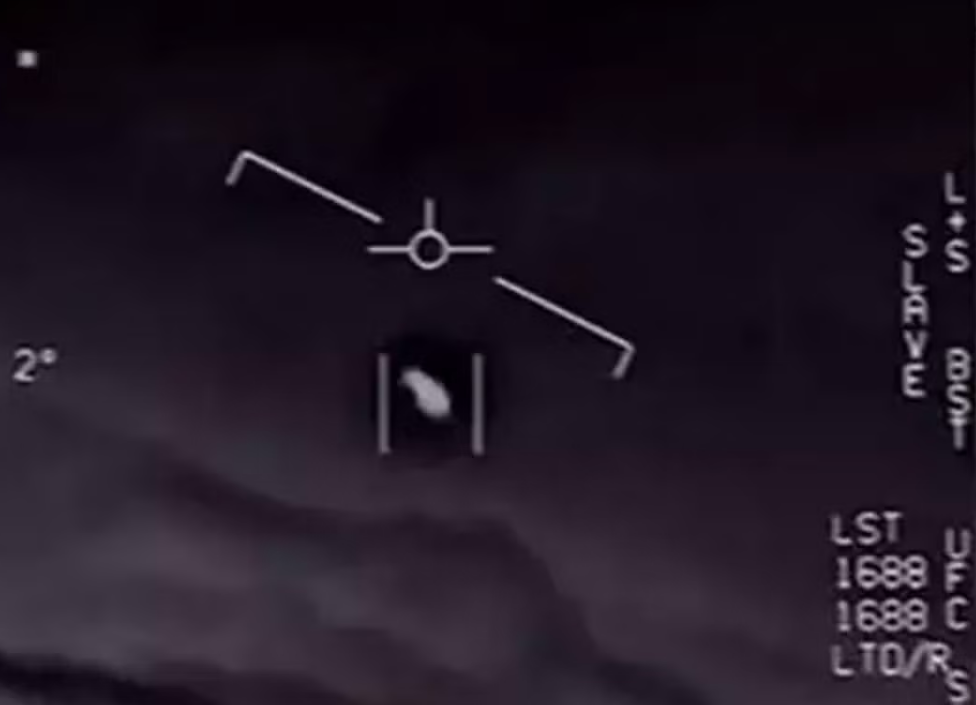
The most cited example is the USS Nimitz UFO incident. During a training exercise off the coast of California in 2004, Navy pilots encountered a white, tic-tac-shaped object with no visible wings or propulsion. The object appeared to accelerate rapidly and maneuver in ways that seemed unusual. The object was not only sighted, but also tracked on radar systems and recorded on infrared sensors, providing multiple layers of observation.
Then there were the USS Roosevelt UAP encounters in 2014 and 2015, where pilots described repeated encounters with unidentified objects over an extended period.
These cases do not prove the existence of extraterrestrial technology. But they do demonstrate that some UFO sightings involve credible witnesses and sophisticated detection systems. That alone is enough to justify continued investigation.
UFO sightings in the Philippines
According to PAGASA, the country receives a small number of reports each year involving unusual sky phenomena. Many are ultimately identified as planets (usually Venus), satellites, or aircraft seen under unusual lighting conditions. However, some cases remain unexplained.
One widely shared case involved a strange “trumpet-like” sound recorded in Batangas. Similar sounds have been reported in countries such as Canada and Germany, suggesting a broader phenomenon. Some suggest these noises are a meteorological phenomena linked to atmospheric acoustics, where temperature layers distort and carry sound over long distances. No physical object was ever confirmed in the Batangas incident.
In Pampanga, videos of lights forming patterns in the sky circulated widely in 2015. Given the proximity to Clark Air Base, these were likely aircraft or coordinated aerial activity. Meanwhile, bright streaks observed over Isabela and Cagayan are consistent with reentering space debris, including fragments associated with Chinese Long March rockets. Similar sightings have been reported across Southeast Asia, often mistaken for UFOs before being identified.