Trump’s tariffs were originally introduced as a response to what Washington has long described as unfair trade practices (particularly large-scale dumping, heavy state subsidies, and industrial overcapacity in China). Steel and solar panels often became examples of products entering global markets at prices competitors struggled to match. A recent supreme court ruling has now reshaped how those tariffs can legally be imposed, with implications that reach beyond Washington and into export-driven economies like the Philippines.
The Supreme Court Ruling and the 15% Tariff Shift
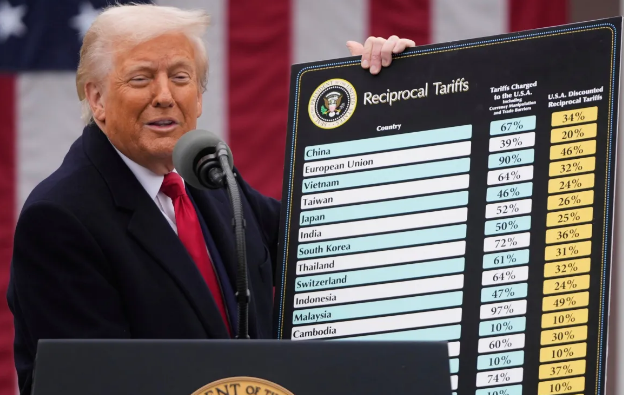
On February 20, 2026, the U.S. Supreme Court ruled 6–3 that President Donald Trump exceeded his authority when he used the International Emergency Economic Powers Act (IEEPA) to impose sweeping global tariffs. The justices said the Constitution assigns tariff powers to Congress and that IEEPA does not authorize broad import duties.
A day later, on February 21, Trump announced a new approach: a 15% global tariff rate under Section 122 of the Trade Act of 1974. That law allows tariffs of up to 15% for 150 days without prior congressional approval.
The message was clear: The legal tool changed, but the policy direction did not.
The Supreme Court ruling did not invalidate the broader concern over unfair trade practices. Instead, it limited how the executive branch can respond. By blocking the use of emergency powers for broad tariffs, the Court signaled that future trade measures must rely either on Congress or on more structured trade laws such as anti-dumping investigations or national security reviews.
Trump’s immediate pivot to a 15% global tariff ceiling shows that the administration intends to maintain trade pressure (particularly on countries accused of distorting markets) but within a different statutory framework.
For global markets, this creates both clarity and uncertainty. The emergency tariff model has been curtailed. But a new temporary global tariff baseline has been introduced.
Current Status of PH–U.S. Tariffs: The 19% Baseline
For the Philippines, the key fact remains straightforward: a 19% tariff on Philippine exports to the United States continues under a bilateral agreement signed in July 2025.
That deal lowered an earlier threatened rate but still left Philippine goods facing a substantial duty, while most U.S. exports to the Philippines entered tariff-free. The newly announced 15% global tariff does not automatically replace this 19% arrangement. Unless renegotiated, Philippine exporters remain subject to the higher rate.
Electronics, semiconductor components, garments, and agricultural goods therefore continue to face added costs in the U.S. market.
What This Means for the Philippine Economy
The effects are uneven.
A 19% tariff narrows price competitiveness, especially in industries that operate on thin margins. Exporters may find it harder to absorb costs or maintain market share. Investment decisions tied to U.S. access can also slow when policy frameworks shift.
At the same time, clearer limits on emergency tariff powers may reduce abrupt policy swings. Predictability matters to investors. If future talks bring Philippine tariffs closer to the 15% global ceiling, exporters could regain some ground. Ongoing supply-chain diversification away from China may also continue to benefit Southeast Asian producers, including the Philippines.
Much will depend on whether the 15% tariff remains temporary or becomes part of a longer-term strategy.
Global Trade War Implications
The deeper issue remains structural. U.S. officials argue that China’s state-backed industrial model (including subsidies, overcapacity, and alleged dumping) distorts global competition. The original tariff surge was designed to counter those pressures.
The Supreme Court ruling does not dismiss those concerns. It changes the legal pathway. Instead of sweeping emergency tariffs, Washington may rely more heavily on targeted anti-dumping cases, sector-specific investigations, and congressional trade legislation.
For China, that could mean fewer abrupt tariff shocks but more coordinated and legally grounded trade enforcement. The confrontation shifts from emergency action to institutional process.